

'/%3E%3Cpath%20fill='%23b2b2b2'%20d='M241%20382q0%2016%2017%2026%2017%2011%2042%2011t42-11q16-11%2017-26V269H241'/%3E%3Cpath%20fill='%239f7e00'%20d='M241%20379q0%2014%208%2023%209%209%2021%209%2014%200%2021-9%209-9%209-23V269h-59'/%3E%3Cpath%20d='M241%20339v-70h59v110q0%2014-9%2023l-6%205v-68h-15v72q-8%200-14-4v-68zm59%2040c0%2022%2015%2032%2029%2032%2021%200%2030-18%2030-32v-40h-59'/%3E%3Cpath%20fill='%239f7e00'%20d='M266%20277v5h2v12h-3v-5h2v-5h-9v5h2v5h-4v9h3v18h-5v10h34v-10h-5v-18h3v-9h-4v-5h2v-5h-9v5h2v5h-3v-12h2v-5zm42%20101q0%2010%206%2017%206%206%2015%207%2010-1%2016-7%206-7%206-17v-29h-43'/%3E%3Ccircle%20fill='%230044ad'%20cx='329.5'%20cy='372'%20r='6'/%3E%3Cellipse%20fill='%230044ad'%20cx='300'%20cy='340'%20rx='16'%20ry='21'/%3E%3C/svg%3E)
The Twilight of Trust
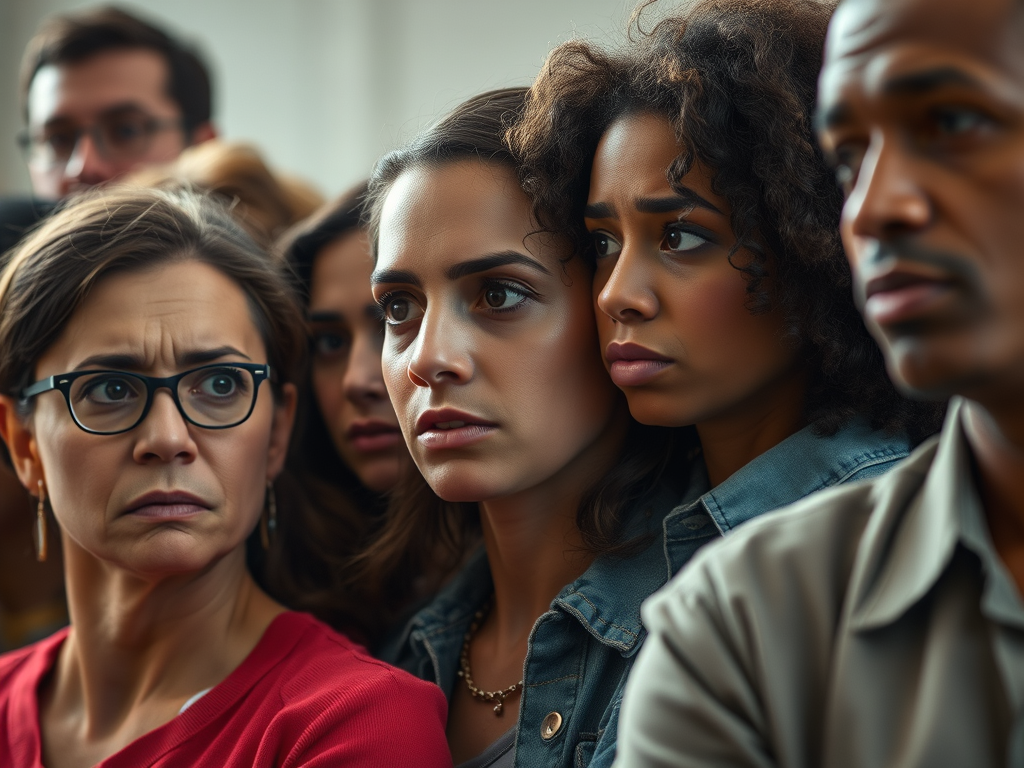
Two out of three Americans no longer believe that the political system can solve the nation’s problems.[1] This is the most common finding in surveys conducted by The New York Times and Siena College, reflecting a legitimacy crisis nationwide. Additionally, another poll — conducted by NPR, PBS, and Marist — shows that one in three citizens considers violence “perhaps necessary” to “get the country back on track”.[2] Confidence in the democratic process has hit historic lows, and a key aspect of this is its widespread nature: distrust is no longer limited to one party but has become a nationwide psychological issue.
In 2025, in the United States, politics is no longer seen as a way to resolve disputes but as a battleground where conflicts actually happen. The long-term decline in legitimacy — which started with Watergate and continued through the trauma of 9/11, the 2008 financial crisis, the January 6th attack on the Capitol, and the COVID-19 pandemic — has built up over time. Unlike previous crises, this one affects not only the ruling elite but also impacts society as a whole. It signals the erosion of civic trust — what American sociologists call “horizontal disintegration” — a breakdown in mutual trust among citizens and a loss of faith in the State.[3]
Psychopolitics of Decline
This disintegration is driven by widespread psychological distress. According to the CDC, the percentage of adults reporting symptoms of anxiety or depression has doubled since 2019.[4] Gallup reports unprecedented levels of stress, anger, and daily sadness.[5] It seems that American society has lost its collective self-esteem, a nation exhausted by its own internal struggles. The American Dream, once a promise of personal redemption for decades, is now seen either as a memory or a privilege. Only 36% of respondents in the WSJ/NORC survey still believe that “those who work hard can improve their lives.”[6]
Wage stagnation, housing insecurity, immigration, and crises in the welfare system have fueled deep social frustration, which manifests as political anger and civic disengagement. Anxiety isn’t just a side effect of American capitalism; it has become a political language and a structural force that influences behaviors and loyalties. The “tribalization of emotions,” as sociologist Robert Putnam calls it, has replaced civic community with isolated micro-identities. Blue cities and red rural areas no longer share values, media, or even symbolic spaces. People marry, live, and stay informed within homogeneous emotional bubbles. The other side is no longer seen simply as an opponent but as moral otherness, the psychological prelude to every civil war.
“They Will Not Replace Us!” – The Myth of Decline
The chant that echoed through Charlottesville in 2017 — “They will not replace us!” — has become a symbol of America’s growing fear. It’s not just about racism but also a natural reaction to feeling overwhelmed. Census Bureau projections show that by 2045, non-Hispanic whites will be a minority.[7] Demographically, this is neutral; psychologically, it feels disruptive.
What experts call “replacement anxiety” has extended beyond the far right’s fringe. It appears — in different tones — in mainstream media and the quiet fears of the white middle class. The so-called Great Replacement Theory, popularized by conspiracy websites, has gained political support as Republican leaders warn of a “migrant invasion” threatening American culture and identity.
Fear of demographic changes is linked to worries about moral and civic decline. Multiculturalism, once praised as a symbol of American strength in the 1990s, is now often seen by many as a source of division. In this setting, nostalgia for the past mixes with a desire for purity, creating fertile ground for leaders who vow to restore order and identity.
The Rhetoric of the “Internal Enemy”
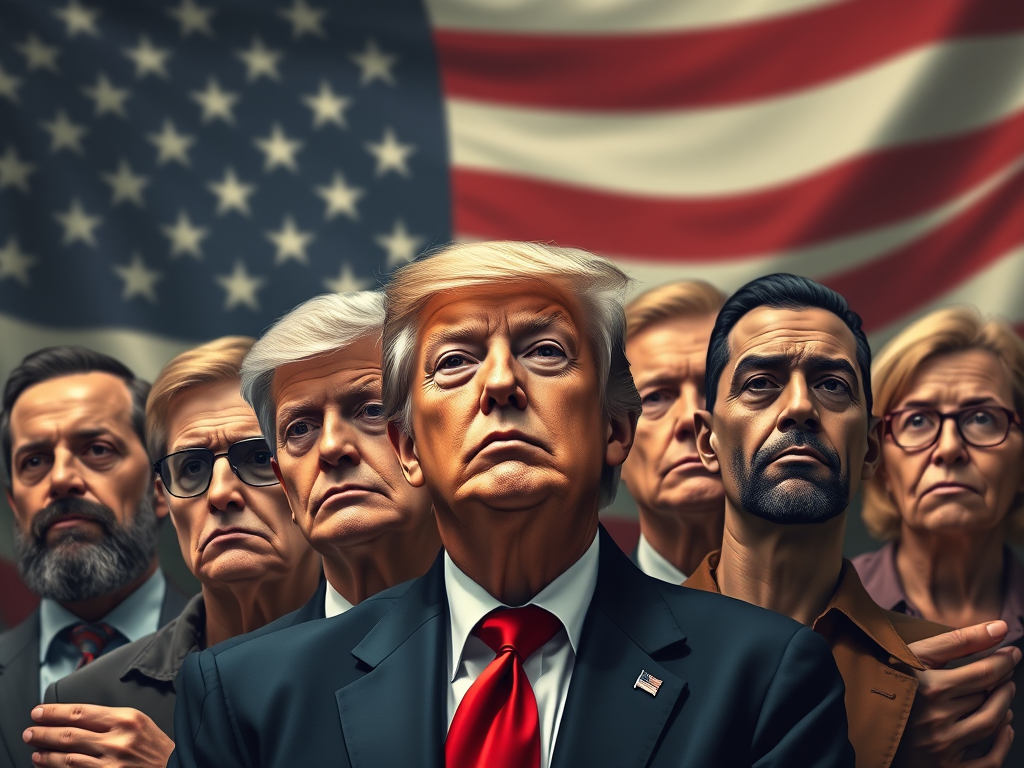
Donald Trump has politicized collective psychology. During his second term, the line between external and internal security has become less clear. Stephen Miller, a long-time adviser, suggested labeling the Antifa movement as a domestic terrorist organization.[8] The goal, more symbolic than practical, is to frame dissent as a threat to the status quo. In the new presidential rhetoric, radical Democrats, “enemies of the people” in the media, and independent judges are called “traitors to the American way.”
Defense Secretary Pete Hegseth has renamed the Pentagon the Department of War — reversing its 1947 title — and states its main goal is “to neutralize enemies, both external and internal.”[9] Even Trump has echoed this message. This shift politicizes the military, reminiscent of McCarthyism but with much more advanced technology.
The National Guard has been deployed to several Democrat-led cities, claiming to fight urban crime. However, it is widely seen as a federal occupation of opposing areas. Seeing soldiers patrol streets in Chicago or San Francisco has become a powerful symbol of Trump’s authority: force as spectacle.[10]
The National Pedagogy
The creation of the “internal enemy’ reflects the development of the “ideal citizen.” With the relaunch of the 1776 Commission and the overhaul of school curricula, the Trump administration has established a clear national strategy for education. Schools that offer gender studies or DEI (Diversity, Equity, and Inclusion) programs have lost federal funding; textbooks and curricula are being reshaped to emphasize patriotism and the Christian mission of the nation.[11]
Educational language becomes a tool for symbolic shaping. The goal is not only to elevate cultural standards but also to rebuild a shared narrative that reduces identity anxiety. Schools once again serve as political testing grounds: what is included in the curriculum unites, while what is excluded causes division. It is Trump’s response to the trauma of fragmentation.
However, like all authoritarian educational approaches, this one has the opposite effect. Students in major cities oppose it as an attempt at ideological control; teachers call it a “moral purge.” The “battle for the soul of the nation” — as the president himself describes it — is no longer just about political parties, but about the very nature of reality.
The Politics of Anxiety
Anxiety has become central to American politics. Driven by partisan media, digital disinformation, and social crises, it fuels the emotional urge for constant emergency rhetoric. Trump-style language — blunt, apocalyptic, performative — turns vulnerability into a sense of belonging: “The country suffers because it has been betrayed; I will make you strong again.”
In this context of psychopolitics, each personal insecurity is assigned to a specific group: the immigrant, the progressive, the bureaucrat, or the intellectual. It’s a cathartic process that allows economic frustration to be endured without changing the economic system. Collective anxiety, therefore, becomes the primary force behind a new form of democratic authoritarianism.
America as a Chronic Patient
The country that once saw itself as the world’s leader now faces exhaustion. No longer the missionary nation of Wilson or Kennedy, it has become a tired society fearing collapse. After the pandemic, inflation, and endless wars, the belief in a special destiny has shifted to a sense of unavoidable decline.
This exhaustion goes beyond the physical; it is spiritual. America no longer depends on its own sense of exceptionalism. What was once seen as a virtue — individualism, competition, freedom — has become a source of stress and loneliness. In Durkheimian terms, American society is facing anomie: a collapse of shared rules and meaning.
Still, America remains a strong nation with firm institutional defenses. Federalism, the balance of powers, and the rule of law prevent it from collapsing quickly. But the crisis is internal: a slow decline in the emotional bonds that connect states and citizens.
Civil War or Psychological War?
A traditional civil war with clear fronts and secessions still seems unlikely. However, psychological warfare is already underway. Everyday language has become more militant; social networks now function as symbolic battlegrounds; and internal enemies have replaced external threats. The very idea of “two Americas” — one progressive and global, the other rural and nationalist — has become a self-fulfilling prophecy.
The immediate geopolitical consequence is clear: a divided America loses credibility as a leader of global order. China and Russia watch closely; allies become more cautious; multilateral institutions hesitate. The imperial power is now a prisoner of its own subconscious. Ultimately, geopolitics is a form of collective psychology in action: those who cannot control their fears tend to project them outward.
United States or Divided States
America’s future depends on a factor no economic indicator can measure: the ability to turn anxiety into purpose instead of hatred. As long as fear remains the dominant language, all efforts to rebuild unity will likely fail. A nation can survive a recession, but not the loss of mutual trust.
The United States has lost confidence in its own narrative: the frontier, exceptionalism, and manifest destiny. That’s why the question is no longer whether the U.S. will stay united but whether it can still feel united. The geopolitics of twenty-first-century America begins in its subconscious, within the therapy of an empire that no longer believes it deserves itself.
Notes
- New York Times / Siena College Poll, September 2025, “Americans Doubt the System Can Fix Itself.”
- NPR / PBS / Marist Poll, October 2025, “Violence as Political Tool.”
- See R. Putnam, Bowling Alone, New York, 2000.
- Centers for Disease Control and Prevention, Household Pulse Survey, 2025.
- Gallup Global Emotions Report 2025.
- Wall Street Journal / NORC, “Americans Lose Faith in the American Dream”, March 2025.
- U.S. Census Bureau, Demographic Projections to 2060.
- Statement by Stephen Miller, White House briefing, May 2025.
- Speech by Pete Hegseth, Quantico, June 2025.
- Presidential Executive Order No. 17/2025 on the use of the National Guard.
- Executive Order 14099, “Patriotic Education and 1776 Curriculum”, March 2025.
Essential Bibliography
Primary Sources
– New York Times / Siena College Polls, 2024–2025.
– Pew Research Center, Public Trust in Government, 2025.
– Gallup, Global Emotions Report, 2025.
– U.S. Census Bureau, Population Projections, 2023.
– CDC, National Health Statistics Reports, 2024–2025.
– Executive Orders No. 17/2025 and No. 14099.
Secondary Sources
– Massimo Scattarreggia, Fissures and Factions in the United States, 2024.
– Id., The Delegitimization of Institutions in the U.S., 2024.
– Id., The New American Right: Ideology, Factions, and Geopolitics, 2025.
– Id., The Decline of American Hegemony and the Transition of the World Order – Part IV, 2025.
– Hannah Arendt, On Violence, New York, 1970.
– Zygmunt Bauman, Liquid Fear, Cambridge, 2006.
– Peter Turchin, End Times, New York, 2023.
– James Davison Hunter, Culture Wars, New York, 1991.
Polls and Reports
– Brookings Institution, The State of Polarization in America, 2025.
– CSIS, Domestic Terrorism Threat Assessment, 2025.
– Rasmussen Reports, Civil War Likelihood Survey, 2024.




Leave a Reply