


Reflections on “More in Common” polling of 10,971 voters interviewed between April 2025 and January 2026
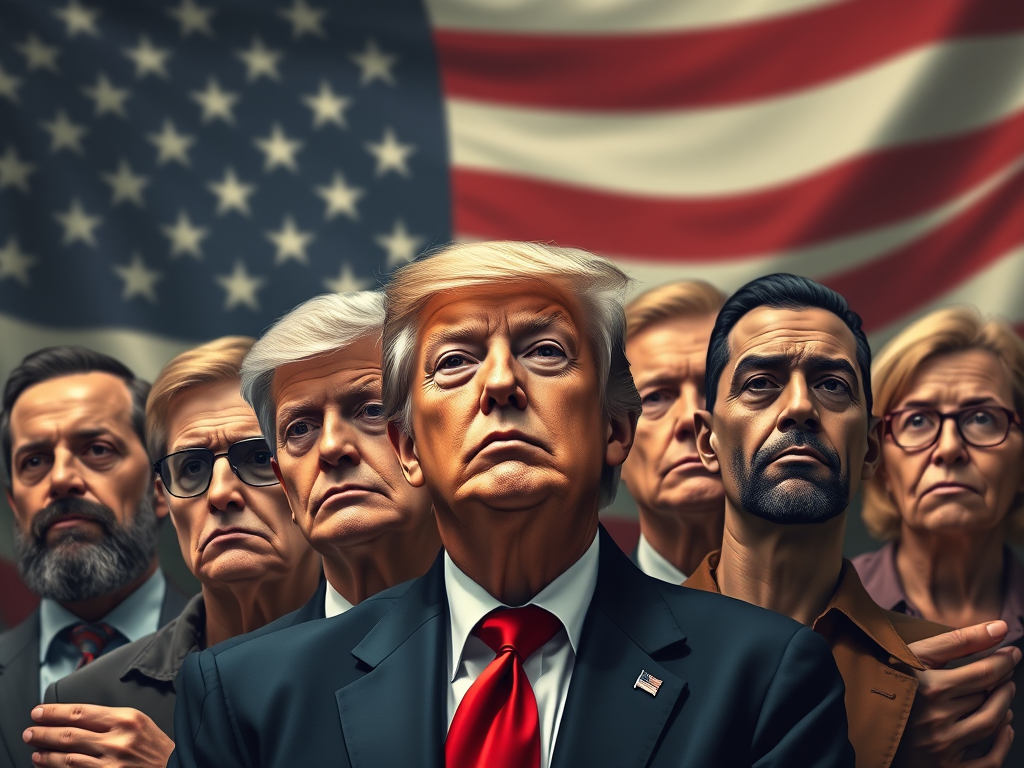
The MAGA coalition today is not a party: it is an emotional federation. An archipelago of right-wing currents that never fully align on program, priorities, or even moral grammar, yet converge on one thing alone: sovereignty as spectacle. In this sense, Trumpism is not an ideology; it is a command device in a society that has lost glue, trust, and a shared language. The point is not that Trump is “consistent.” The point is that, in a tribalized country, Trump still manages to decide who “we” are and who “they” are — and to do so in real time, according to the occasion, without paying the price of contradiction.
The archipelago: four Americas inside MAGA
The recurring mistake — including in the media — is to portray MAGA as a uniform bloc. The latest data, once again, describe it as a coalition of four families, each with its own political psychology: “MAGA Hardliners” (29%), “Anti-Woke Conservatives” (21%), “Mainline Republicans” (30%), and the “Reluctant Right” (20%).
Translated into geopolitical language: the “new right” is a constellation. The institutional right seeks governability; the movementist right seeks rupture; the anti-woke world aims to cleanse schools, media, and HR; mainline conservatism demands borders, the economy, and cultural stability; and finally, a band of voters who do not love Trump but use him as a tool or tolerate him as the lesser evil.
This geometry explains resilience: if you analyze the coalition ideologically, you find only incoherence. If you analyze it as an economy of recognition, you see a structure able to survive almost anything.
Who is with Trump: sacred loyalty, contractual loyalty
With Trump, first and foremost, is the hard core: the hardliners, often driven by an almost eschatological view of politics as a struggle between good and evil. Here, consent is not “approval”: it is belonging. Trump is not a candidate; he is a badge of recognition.
With Trump, there is also the anti-woke world, more secular and often more affluent: it does not necessarily demand welfare or redistribution; it demands that the progressive cultural order be humiliated and pushed back. This component lives politics as a cold civil war within institutions.
With Trump, there is also the more “normal” body of the Republican Party: the mainline. They are those for whom borders, the economy, and cultural stability matter more than daily chaos. They may loathe excess, but they prefer a leader who acts within a system that justifies itself.
Finally, there is a contractual loyalty: parts of national capitalism and techno-libertarian environments. This is not love; it is an exchange. Selective deregulation, access, protection, tariffs, reshoring, and the war on “hostile” bureaucracies. This component remains as long as the price does not exceed the benefit. It is the most mobile part of the constellation.
Who is against (or tries to be): an elite mutiny, not a grassroots revolt
The MAGA paradox is this: dissent often sits at the top, not at the bottom. Influencers, former advisers, and political entrepreneurs quarrel, threaten splits, and manufacture internal “civil wars.” But that does not mean they command the electorate.
There is no “Trumpism” without Trump. There is Bannonism, Tuckerism, and perhaps Vance-ism, but these are brands in search of an inheritance, not real centers of sovereignty. And indeed, when Trump decides — even against the “America First” liturgy as interpreted by influencers — the base follows. The evidence lies in a sequence of cases: in external operations (Iran 2025; Venezuela 2026), the idea of a MAGA revolt was far noisier than real.
Venezuela is instructive: just as commentators were shouting about rupture, a Reuters/Ipsos poll found that 65% of Republicans backed the operation, while the country as a whole was far more concerned about prolonged involvement. The base does not defend a doctrine; it defends a posture: strength, decisiveness, punishment.
This does not mean there are no cracks. But they are specific cracks: the Reluctant Right (low-propensity voters, often young men and swing voters) lacks the tribal loyalty of other segments; it can evaporate when the economy tightens or when chaos becomes a daily cost. This is where Trump can lose margins without losing the coalition’s heart.
And there is another friction: the institutional one. Episodes such as Greenland show that some Republicans — even in leadership positions — can voice dissent when they perceive systemic risk (tariffs against allies, a NATO crisis), but the dynamic often remains “controlled deviation/return,” facilitated by diplomatic management that neutralizes escalation without humiliating Trump.
Why Trump works: four roles, one theatre
This is the substance. Trump does not build consent through programmatic coherence; he builds it on an emotional payoff that “outweighs” logic. His power depends on his ability to play different roles for different segments of the coalition.
The first is the builder: paradoxically, many voters see him as a constructor — someone trying to fix a broken system (58% in the sample). The rhetoric of demolition is perceived as reconstruction: tear down in order to refound.
The second is the redeemer: he restores status and respect to groups that feel despised by cultural elites. Here, numbers matter more than opinions: a large majority of Trump supporters blame the woke left for the ruin of education, news, and entertainment; above all, 84% believe Trump “respects people like me”. In a society that runs on denied recognition, this is political fuel.
The third is the blasphemer: the violator of progressive norms. This is not folklore; it is ritual, transgression as symbolic revenge. For part of the hard core, politics is not compromise but retribution: making “the left pay” for errors and lies. It is a grammar of cultural civil war.
The fourth is the grand narrator: in America’s epistemic crisis, Trump does not merely ask for trust; he claims a monopoly on truth. Among hardliners, 93% say they trust him more than “all” or “most” other sources; among anti-woke conservatives, 72%. This is not merely charisma: it is an attempt at narrative sovereignty in a country that no longer shares facts, only affiliations. These roles work because they answer deep needs: hope, validation, and clarity. It is politics as collective psychology, not policy.
The real fault line: “movement” vs “government”
The coalition’s resilience does not erase the structural contradiction: governing is not performing. The movement thrives on cultural war, simplification, and enemies; government operates within constraints, trade-offs, and costs. Trump tends to respond to limits with escalation — a trait that can make him “stronger and weaker” at the same time, because every show of force also builds new opposing coalitions and new veto points.
This is where the strategic question bites: how long can a coalition built on sovereignty-as-spectacle hold when the shock turns material (prices, war, recession, administrative disorder)? For now, it holds because Trump does not promise peace; he promises symbolic victory. But the history of emotional coalitions is always the same: they break not when the leader betrays an idea but when he stops distributing recognition and starts imposing costs.



Leave a Reply