


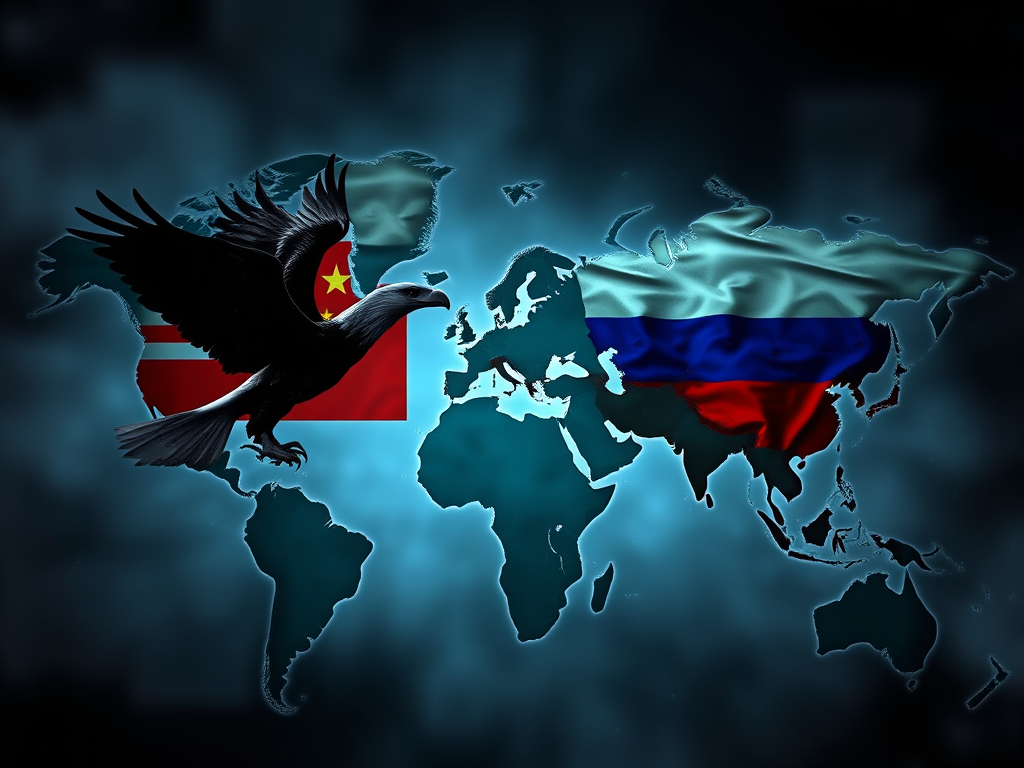
The exhausted hegemon, the stagnant rival, the wounded revisionist
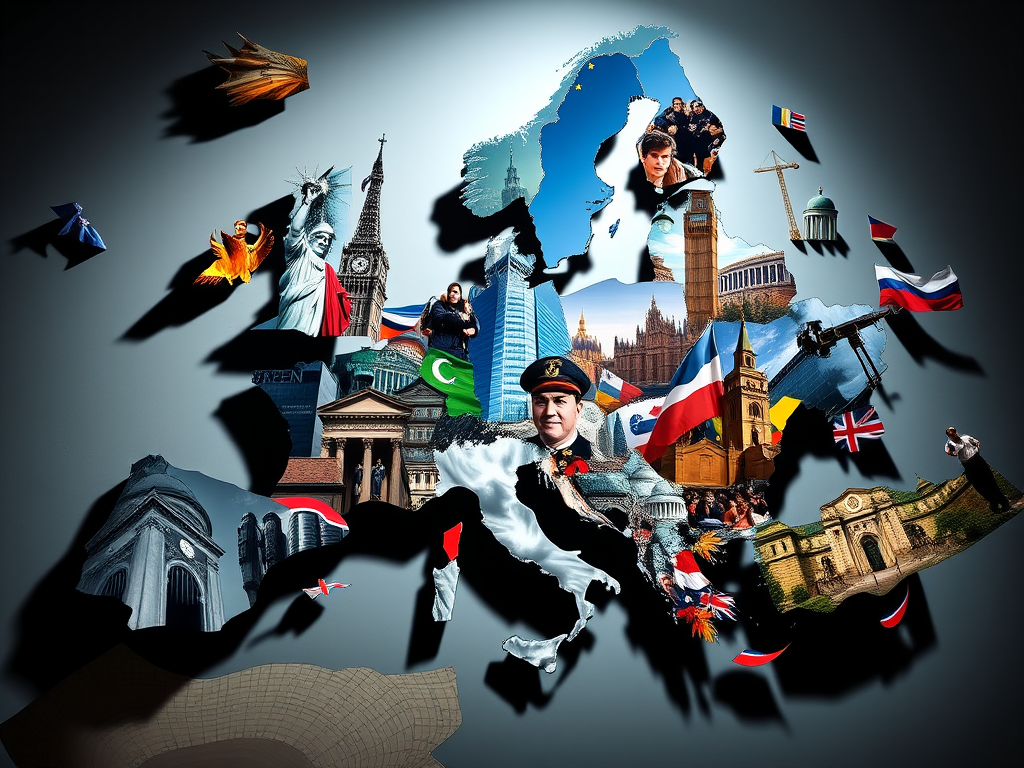
We are experiencing a hegemonic shift that, at least for now, does not result in a new order but instead creates a denser, more fragmented, and harder-to-govern disorder. American hegemony – the higher paradigm that, for thirty years, allowed us to envision a unipolar world – has entered a structural rather than cyclical crisis. Alliances are weakening, ideological bonds are fading, opportunities for regional and middle powers are expanding, and spheres of influence are returning to the language and practices of power politics. At the same time, the arms race and the race for artificial intelligence are accelerating, while the key domain is shifting to information and disinformation: the ability to shape perceptions of war, the enemy, and even domestic social reality is becoming a crucial aspect of power. Conflicts at this stage tend to be informal and unpredictable: more challenging to contain and more vulnerable to uncontrolled escalation.
A fundamental shift marks the transition from the post-Cold War unipolar moment to this chaotic interregnum: order is giving way to transactions. There is no longer a single recognized center setting the rules and boundaries of what is possible; instead, we see multiple forums, parallel negotiations, and overlapping dossiers. On one front, actors align with Washington; on another, with Beijing; on a third, with Moscow; and on other fronts, they try to hedge, delay irreversible decisions, and earn benefits from disorder. Foreign policy is becoming a series of exchanges: security for bases, capital for resources, diplomatic recognition for votes in international organizations.
In such a world, the three superpowers – the United States, China, and Russia – are not just three actors vying for dominance, as seen in an international relations textbook. Instead, they are three political and social systems plagued by internal cohesion crises that range from somewhat advanced to significant, forcing them to turn their vast power into increasingly defensive, fragmented, and often contradictory strategies. Their interests remain maximalist; the structural forces driven by geography, demography, economics, and history continue to push them toward expansion, influence projection, and the aggressive defense of red lines. However, external constraints and internal limitations — economic, demographic, institutional, and psychological — severely restrict what is actually achievable.
The main question in this stage, sparked by the war in Ukraine, the ongoing conflicts in the Middle East, and the confrontation over Taiwan in the South China Sea, seems simple only on the surface: what are the United States, China, and Russia seeking today? And, most importantly, how far can they actually go in achieving their goals, given the state of their domestic systems and the increasingly limited options the global situation permits?
1. United States: a tired hegemon that must set priorities
The United States remains the only truly global power, capable of projecting significant military force worldwide and influencing financial, technological, and cultural flows across every continent. However, it is no longer able —psychologically, materially, or politically — to sustain a “one-legged” world order, as it did during the brief unipolar period. Its arsenal exposes industrial bottlenecks; its ability to wage long, multi-theater wars is limited; and its public opinion is drained after two decades of endless conflicts and a series of domestic shocks — financial crises, the pandemic, identity polarization — that have eroded confidence in the national project.
Simultaneously, the country is being consumed by a low-level psychological conflict. Deep political divisions, fears of demographic “replacement,” the language of the “internal enemy”, the politicization of institutions, and ongoing culture wars all contribute to a legitimacy crisis. This makes it increasingly hard for Washington to present itself as a credible global leader. The very phrase “leader of the free world” sounds more and more empty in a society where half the population no longer sees the other half as legitimate, and where compromise is often viewed as betrayal.
Structurally, America’s core interests still reflect those of a maritime empire: preventing the rise of a hostile power capable of dominating Eurasia, maintaining control over key sea lanes and chokepoints, preserving the role of the dollar and the international institutions – financial and otherwise – established under U.S. leadership, and ensuring that the Western Hemisphere remains a security zone resistant to outside strategic influence. However, these interests now must be balanced against a series of new imperatives.
The primary goal is to end the war in Ukraine — particularly to resolve the Crimea issue — not in the name of “Ukrainian interest” or “just peace,” but to protect specific U.S. interests. Washington cannot afford a prolonged conflict that drains strategic resources, exhausts munitions supplies, diminishes Western public support, and strengthens the partnership between Moscow and Beijing. The aim is to prevent an endless war, keep the conflict manageable, and leverage European stability to reopen dialogue with Russia, hoping to gradually pull it away from China’s influence. It’s less about punishing Putin than about stopping the growth of a strong Sino-Russian alliance that could significantly shift global power. U.S. policymakers also believe that improving relations between Washington and Moscow could create strategic opportunities and lead to multiple commercial agreements, from the Arctic to the export of technology to Russia.
The second goal is to prevent the European Union from becoming a fully independent geopolitical actor, as noted in the National Security Strategy 2025. An EU that develops its own defense system, an integrated industrial policy, and a unified external stance would, in the medium term, become a tough negotiating partner and a genuine competitor. A more likely scenario is a continent divided into states that view Washington as an essential security provider, compete for American support, rely on U.S. LNG, and are divided over Russia, China, and the Middle East. European fragmentation — or at least the limits of its political ambitions — keeps Washington as the ultimate decision-maker in intra-European disputes. The Trump administration’s current sponsorship of nationalist European political parties is consistent with this objective.
The third key issue involves burden sharing and shifting. America no longer wants to be the benevolent empire that bears the entire cost of global security; it expects its allies – from Europe to Israel, from Japan to South Korea – to significantly increase military spending, take on operational roles, and assume a growing portion of political risks. Washington still provides the nuclear umbrella, advanced technology, intelligence, and strategic command, but in return, it demands money, troops, bases, and cultural and diplomatic alignment. This signifies a redefinition of the agreement with allied partners-vassals that goes beyond partisan divides: America requests more while offering less.
The fourth goal is to solidify the current situation in the South China Sea and around Taiwan. The United States aims to reaffirm, even symbolically, its dominance of the seas and its role as the protector of the island, without triggering a rush to war that could be set off by an accident or mistake. Strategic ambiguity is increasingly being used as a tool: providing political and military support for Taipei, strengthening alliances with Japan, South Korea, the Philippines, Australia, and India, maintaining a constant naval presence, while avoiding an explicit, unconditional commitment to fight to the bitter end. Simultaneously, the U.S. invests in controlling maritime chokepoints – from the Strait of Malacca to Lombok – and in technological advantages in key areas: semiconductors, space, cyber, and artificial intelligence. The main goal is to slow down and, if possible, gently curb China’s rise, rather than confront it with a premature direct clash.
Finally, there is a need to reaffirm absolute dominance in the Western Hemisphere through a revised, Trump-era version of the Monroe Doctrine. This entails weakening Canada’s and Mexico’s ability to act as independent powers along the borders by transforming them into a strategic hinterland for U.S. energy, minerals, and industrial security. It also means treating Greenland and the North American Arctic as key points in future polar competition. Additionally, it requires maintaining direct or delegated control over the Panama Canal and Caribbean chokepoints. Most importantly, it calls for reducing Russian and Chinese influence in Latin America and the Caribbean, which could serve as the foundation for the next U.S. supply chain, even if that involves destabilizing governments that are not hostile.
Faced with these imperatives, several external constraints and internal limitations become apparent. Abroad, European and Asian allies are growing more distrustful; they fear U.S. disengagement but also question the economic costs of proxy wars and sanctions. The so-called Global South no longer automatically aligns with the Western perspective, declares itself neutral in the war in Ukraine, and looks to China as an alternative partner. Additionally, the growing use of financial sanctions makes the dollar’s strength a double-edged sword, prompting many countries to seek alternative trading routes and payment systems.
Internally, the United States must address political and identity tribalization, which weakens both compromise and deterrence credibility, undermining support for foreign wars; deep economic inequalities that breed resentment and mistrust; and an institutional system plagued by delegitimization, making it very difficult to develop long-term strategies. As a result, U.S. grand strategy is drifting toward a paradox: maximizing external freedom of action while reducing its exposure. Less “world policeman,” more “powerful state” selecting challenges, ending conflicts that have become too costly, and reshaping alliances in response to systemic competition with China and the buildup of a North American “hemispheric fortress.”
2. China: a stalled rise between globalization and domestic fragilities
At first glance, Xi Jinping’s China presents itself as a significant alternative to the Western-led order. In official narratives, Beijing promotes multipolarity over U.S. unilateralism, defends sovereignty against external interference, and supports globalization “for all” rather than a “two-speed” globalization dominated by the G7. China positions itself as the voice of the Global South, which Western development promises have betrayed. It opposes unilateral sanctions, condemns regime-change wars, and advocates new forms of cooperation, such as the SCO and BRICS. Despite this, it should be emphasized that, aside from some bilateral agreements, China does not have a consolidated NATO-type alliance system, and its soft power is not comparable to that of the United States.
Beneath this rhetoric, the primary goal is clear: to gradually replace U.S. dominance with Chinese influence across economic, technological, infrastructural, and institutional spheres, while avoiding — at least for now — the political-military costs that Washington has borne since World War II. The Belt and Road Initiative, alternative development banks and institutions, and major infrastructure projects in Africa, Asia, Latin America, and the Mediterranean help build a web of material and symbolic dependencies, positioning Beijing as a key player in any development plan. This is the “Chinese globalization”.
To carry out this plan, China must focus on several key points. First, it should use the war in Ukraine to weaken Russia without dismembering it. A Russia worn down on its western front, reliant on Chinese demand for energy and raw materials, forced to sell at a discount, and seeking diplomatic protection from the West, becomes a valuable partner: a kind of junior geoeconomic ally, a strategic buffer in Eurasia, a source of leftover military technology, and an aligned vassal in international organizations. China has every reason to keep Moscow stable enough to prevent collapse, but not so strong that it gains complete independence.
The second goal is to claim the symbolic space of “betrayed globalization.” While the United States and Europe discuss de-risking, friend-shoring, and reshoring strategic production, China re-engages with global value chains, open markets, and interconnectedness. According to Beijing, Western sanctions are colonial tools of the twenty-first century; China, on the other hand, offers infrastructure investment, formal respect for sovereignty, and a promise of non-interference. The exchange, however, is very tangible: diplomatic alignment on sensitive issues (Taiwan, Xinjiang, Hong Kong), privileged access to resources, and market openings for Chinese companies.
The third key area emphasizes technological independence. U.S. restrictions on advanced semiconductors, 5G, digital platforms, and AI systems have signaled to Beijing that the main power struggle is not only about territory but also about technology. To remain competitive in the long term, China must accelerate domestic innovation, reduce reliance on Western technologies, and establish its own standards in digital, energy, and financial sectors. The digital currency initiative, alternative payment systems to SWIFT, and the race for AI and Green-tech patents all support this strategy.
The fourth priority is to delay, as much as possible, a full-scale war over Taiwan. Reunification of the island remains an unwavering goal within the vision of the “great rejuvenation of the Chinese nation” by 2049. However, the Party-State recognizes that a high-intensity conflict with the United States and its allies would be dangerous. The People’s Liberation Army is closing the gap quickly but cannot guarantee victory in a short war; the economy faces real estate, financial, and demographic challenges that could make wartime shocks devastating. At the same time, the Chinese population is aging, and its warrior spirit is declining. Therefore, Beijing prefers a strategy of gradual pressure: military actions around the island, information and psychological warfare, targeted economic measures, and efforts to diplomatically isolate Taipei by persuading as many countries as possible not to openly support it.
Here as well, imperial ambitions face considerable limitations. Abroad, China encounters a tightening strategic encirclement in the Indo-Pacific: the AUKUS pact, the QUAD, Japanese rearmament, and increasing cooperation among the United States, India, Australia, and various ASEAN countries form a ring of containment. China remains heavily reliant on exports to Western markets, European and U.S. demand, and advanced technologies from Japan, South Korea, and Germany. Additionally, many elites in the Global South see Chinese involvement as increasingly intrusive: the rhetoric of anti-colonialism and friendship among peoples conflicts with actual experiences of debt, unfulfilled projects, and unfair competition.
Domestically, China is far from uniform. First, tensions persist along land borders with India and Bhutan, and along maritime borders with Japan, the Philippines, South Korea, Vietnam, Malaysia, Brunei, and Indonesia. Territorial and ethnic divisions — ranging from the Uyghur issue in Xinjiang to Tibet — coexist with underlying tensions in coastal provinces that are more globally connected. The gap widens between these internationally integrated cities and aging rural areas. The growth model based on easy credit, real estate booms, and major public investments is revealing deeper flaws. Urban youth unemployment fuels frustration among a generation that once believed in endless upward mobility. The Communist Party-State responds with a mix of repression, nationalism, and promises of future prosperity. However, the increasing control measures — digital surveillance, morality campaigns, internal purges — signal underlying fragility.
The China that opposes U.S. hegemony internally is a regime more afraid of slowing economic growth than strategic competition with the United States. For Beijing, the real struggle is between the government and its own society. Its current strategy can be summarized as expanding economic and political ties around China, securing access to critical resources and sea routes, buying time in the technology and military sectors, preventing shocks that could threaten its already fragile social stability, and continuing the redistribution of the commercial surplus to inland rural areas from where all Chinese revolutions have originated.
While competition with Washington is systemic, it is primarily indirect and asymmetric at present: it occurs in the Global South, within international institutions, and across supply chains more than in direct military conflicts.
3. Russia: a revisionist power between security obsession and the risk of vassalage
Russia enters this phase of hegemonic transition as a wounded revisionist power. It aims to overturn the outcomes of 1991, erase the humiliation of the USSR’s collapse, and regain imperial great-power status by establishing a recognized sphere of influence in Eastern Europe, the Caucasus, and Central Asia. At the same time, it seeks to avoid becoming a subordinate periphery of China, reduced to a warehouse of raw materials and strategic depth for the Middle Kingdom.
The war in Ukraine, initiated by the Kremlin as a quick operation to adjust borders and bolster the “Russian world,” has evolved into a prolonged conflict that has exposed significant weaknesses in Russia’s military and economic systems and increased its dependence on Beijing.
From Moscow’s viewpoint, Russia’s primary geopolitical objectives remain consistent. It considers acquiring strategic depth to the west crucial to prevent NATO from encroaching on its major cities. Controlling the Black Sea and Sea of Azov corridor, the warm-water ports, and energy hubs – either directly or indirectly – is deemed essential. Russia also aims to uphold nuclear and missile capabilities to compensate for its conventional military limitations. Additionally, it seeks to promote a modernized form of Euro-Asianism, positioning itself as a civilizational alternative to Western liberalism and Chinese Confucian models, hoping to attract some former Soviet republics. An important factor is Russia’s challenging geographical position, which requires defending a border over 12.000 miles long.
This leads to the dual movement currently seen in Russian strategic debate, summarized by the idea of “Siberianization.” On one side, there is a defensive retreat to the west, aiming to stabilize the front line in Ukraine on terms acceptable to the Kremlin and, over time, to achieve negotiated coexistence with the United States and Europe’s leading powers. On the other side, there is an effort to gradually shift strategic focus eastward: developing Siberian regions and the Russian Far East, improving infrastructure connections to the Pacific, projecting influence into the Arctic, and leveraging its geography: Russia not just as a periphery of Europe or Asia but as a bridge connecting the two.
Here again, however, interests collide with very tough external constraints. NATO has expanded, become more motivated, and focused more on direct military deterrence than in 2014; Europe, though divided, has begun rearming and reducing energy dependence on Russia, which will be hard to undo fully; China is an essential partner but an increasingly dominant one, setting prices and conditions, investing only where it benefits, and using Russia as an energy and diplomatic rear area within the grand design of the New Silk Road.
On the domestic front, Russia faces structural limitations that are difficult to overcome. Its economy, in terms of size, is comparable to that of a medium-sized European power and remains heavily dependent on hydrocarbon and raw material exports, with negligible industrial diversification and a significant presence of oligarchic rents. The demographic decline is severe, worsened by the emigration of educated young people and war casualties. The political system, centered on the personalization of power, appears stable but makes every transition, succession, or policy change extremely complex. Society is characterized by political apathy, cynicism, and resignation, making it vulnerable to future shocks, especially if the war is perceived by its people as clearly and permanently lost.
In other words, Russia seeks many things – recognition, security, room for autonomous action – but at this point, it can realistically aim for much less: to freeze the Ukrainian front as favorably as possible, to push for some form of détente with the United States, to regain some autonomy from China, and to gradually shift its economy and geopolitical outlook toward Siberia and the Pacific.
Conclusion: three unfinished powers in a single disorder
Considering the interests, imperatives, constraints, and limitations of the three superpowers, the resulting picture is not just a straightforward sequence of hegemons: America dominant, China rising, and Russia as a secondary player. Instead, it reveals an unstable triangle of incomplete powers. The United States remains too powerful for anyone to replace, yet too exhausted and divided to uphold its role as a benevolent, broadly accepted hegemon. China is strong enough to challenge the U.S.-led order but too fragile internally, overly dependent on the global ecosystem, and surrounded by cautious neighbors to fully establish a “Chinese” order. Russia still possesses the weaponry and strategic tradition of a great power, but lacks the economic and demographic foundation to sustain long-term competition east or west.
Around this triangle, a group of ambitious middle powers — India, Turkey, Iran, Saudi Arabia, Brazil — are taking advantage of the transition to expand their influence, sell their alignment to the highest bidder, and experiment with new combinations of authoritarian domestic politics and selective economic openness. The European Union swings between trying to become a geopolitical player and being the Western extension of Eurasia: more of a battleground than a fully developed actor.
The current phase is not merely a step toward a stable multipolar world but an open contest to redefine spheres of influence, rules of engagement, and even the language we use to describe the global landscape. The interests of the three superpowers both overlap and clash; structural forces push them toward confrontation; internal constraints and limitations call for caution, pauses, and transactional compromises. The war in Ukraine, the ongoing escalation in the Middle East, and the Taiwan crisis are not isolated incidents but different battlegrounds in the same hegemonic shift, which, for many years to come, may result not in a new order but in increasingly widespread disorder.


Leave a Reply