

'/%3E%3Cpath%20fill='%23b2b2b2'%20d='M241%20382q0%2016%2017%2026%2017%2011%2042%2011t42-11q16-11%2017-26V269H241'/%3E%3Cpath%20fill='%239f7e00'%20d='M241%20379q0%2014%208%2023%209%209%2021%209%2014%200%2021-9%209-9%209-23V269h-59'/%3E%3Cpath%20d='M241%20339v-70h59v110q0%2014-9%2023l-6%205v-68h-15v72q-8%200-14-4v-68zm59%2040c0%2022%2015%2032%2029%2032%2021%200%2030-18%2030-32v-40h-59'/%3E%3Cpath%20fill='%239f7e00'%20d='M266%20277v5h2v12h-3v-5h2v-5h-9v5h2v5h-4v9h3v18h-5v10h34v-10h-5v-18h3v-9h-4v-5h2v-5h-9v5h2v5h-3v-12h2v-5zm42%20101q0%2010%206%2017%206%206%2015%207%2010-1%2016-7%206-7%206-17v-29h-43'/%3E%3Ccircle%20fill='%230044ad'%20cx='329.5'%20cy='372'%20r='6'/%3E%3Cellipse%20fill='%230044ad'%20cx='300'%20cy='340'%20rx='16'%20ry='21'/%3E%3C/svg%3E)
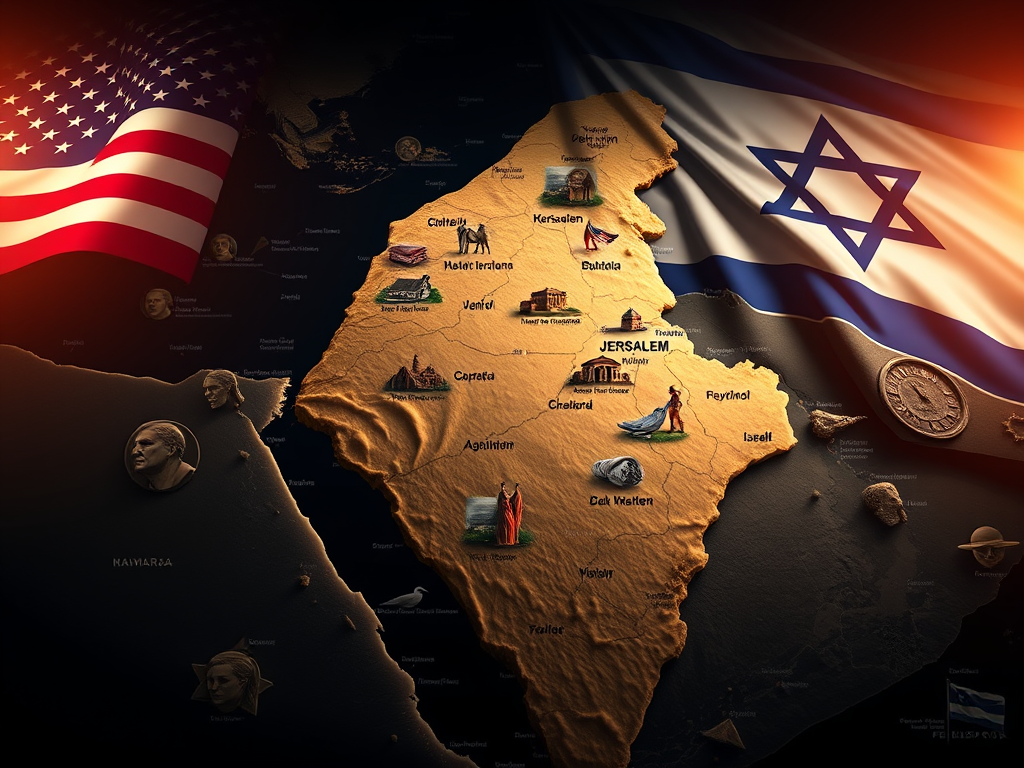
Donald Trump’s approach to Israel’s wars — past, as demonstrated during his first term, and present and future, as evidenced by his current declarations and decisions — marks a significant discontinuity compared to previous administrations.
In his first term, the policy toward the Middle East was characterized by a marked shift toward unconditional support — both politically and militarily — for Israel. The close personal and political relationship between Trump and Israeli Prime Minister Benjamin Netanyahu guided many of the administration’s decisions.
In December 2017, the administration officially recognized Jerusalem as the capital of Israel and moved the embassy there in 2018. In 2019, it recognized Israeli sovereignty over the Golan Heights. In January 2020, it presented its peace plan, which proposed recognizing Israeli sovereignty over much of the West Bank and creating a Palestinian state with limited sovereignty and its capital in the suburbs of East Jerusalem.
In addition, Trump’s first administration suspended financial aid to Palestinian bodies, closed the consulate in East Jerusalem, and declared that Israeli settlements in the occupied territories do not violate international law — reversing decades of U.S. and UN policy and effectively giving Israel a green light to further expand settlements in the West Bank.
At the same time, Trump’s first administration launched the Abraham Accords, which led to the normalization of relations between Israel and several Arab states. These agreements represented a paradigm shift in the region, shifting the focus away from the Palestinian question toward a strategic “Semitic” alliance against Iran. The American intention was to strengthen Israel and delegate to it the responsibility of controlling the region and protecting friendly Arab states — primarily Saudi Arabia — against the perceived aggressiveness of the Islamic Republic.
Iran was considered by Netanyahu and Trump to be the primary enemy, and in 2018, the American administration withdrew the United States from the Joint Comprehensive Plan of Action, claiming that the agreement was too weak to prevent the Islamic Republic from developing nuclear weapons. This was the beginning of a campaign of “maximum pressure” on Iran, which was subjected to economic and military sanctions. In January 2020, a drone strike ordered by Trump killed Iranian General Qasem Soleimani, head of the Quds Force.
All these decisions further strengthened the United States’ ties with Israel but also inflamed tensions in the region and compromised the United States’ role as a mediator.
The policy of the subsequent Biden administration toward Israel and the conflicts in the Middle East was characterized by a more balanced approach — closer to the pre-Trump historical continuum — between maintaining U.S. support for Israel and attempting to promote regional stability. In particular, the Biden administration reaffirmed its support for the two-state solution as the only way to guarantee peace and security for both Israelis and Palestinians, although no concrete steps were taken to advance negotiations, given the current impossibility of realizing this vision.
In outlining the foreign policy of his second administration and in appointing those responsible for implementing it, Trump has shown that he intends to return to the ambitious and unilateral policy of his first term, centered around three main pillars: strengthening Israel, building Arab–Israeli alliances, and containing Iran. This Middle East policy has not only reshaped Arab–Israeli relations in recent years but is also shaping the geopolitical dynamics of the entire region.
Thus, the crucial question today is: to what extent will the Trump administration support Israel in its wars? If, on the one hand, the cooperation envisaged by the Abraham Accords is helping Arab–Israeli relations, on the other, Israel’s wars are undermining them due to the ruthlessness with which the Jewish state fights the Palestinians and occupies new territories. The Palestinian question has once again become the main obstacle to expanding the Accords, which are the cornerstone of Trump’s Middle East policy both now and during his first term.
Despite Netanyahu’s hardline stance, the new American administration has confirmed total support for Israel. Trump himself has reiterated his alignment with the Jewish state’s policies, while emphasizing the desire to keep the United States out of prolonged conflicts — even though, in his trademark inconsistency, he has floated solutions that would imply endless wars. Beyond these provocations, the success of the American strategy requires Netanyahu to abandon the idea of Greater Israel and to leave the Palestinians with the hope of one day having a state of their own. Conditions that bring us back to our question: how far is Trump willing to follow Netanyahu?
As we have already seen, for the new Trump administration, the normalization of relations between Israel and the Arab states remains a priority, based on relaunching and extending the Abraham Accords with a focus on economic and military cooperation against common threats. Among its several advantages, such cooperation would open the possibility of pressuring Arab states to reduce their support for the Palestinian cause. It would limit not only Iran’s influence but also Turkey’s role in regional geopolitics, although it could simultaneously lead both countries to become more aggressive to avoid possible isolation. Finally, it would allow the United States to reduce its human, economic, and military resources in the Middle East to concentrate them in the South China Sea region for the containment of China, where the U.S. believes the struggle for global hegemony will be decided.
However, as already stated, Arab–Israeli cooperation could only materialize if Netanyahu backtracks on the idea of Greater Israel and ends the military campaigns and expulsions — or even mass killings — of Palestinians. So, what will Trump do if Israel persists in its ongoing military actions?
The appointment of Marco Rubio as Secretary of State, Mike Waltz as National Security Advisor, and Mike Huckabee as Ambassador to Israel means support both for the policy of expanding Israeli settlements in the occupied territories and for more aggressive positions toward Iran and its proxies. Furthermore, these appointments suggest a reduced focus on peace negotiations with the Palestinians and the abandonment of the two-state solution rejected by the current Israeli government. Finally, they indicate that the top U.S. priority in the coming years will increasingly be the containment of China.
Therefore, it is likely that the Trump administration — if its policy of “maximum pressure” does not push the Islamic Republic into a surrender agreement, which is the desired goal — will provide support, perhaps not only political but also military, to Israel’s ongoing operations in Gaza, the West Bank, Lebanon, Syria, Iraq, Yemen, and even Iran against the Islamic Republic and its proxies, including the provision of advanced weapons and strategic assistance, though with more attention than in the past to costs and benefits.
Thus, geopolitically, the consequences of this alignment of the Trump administration with Israel could increase the risk of military escalation and regional conflicts; they could also, however, achieve short-term stability in the Middle East under an Israeli pax and with a subdued Iran.
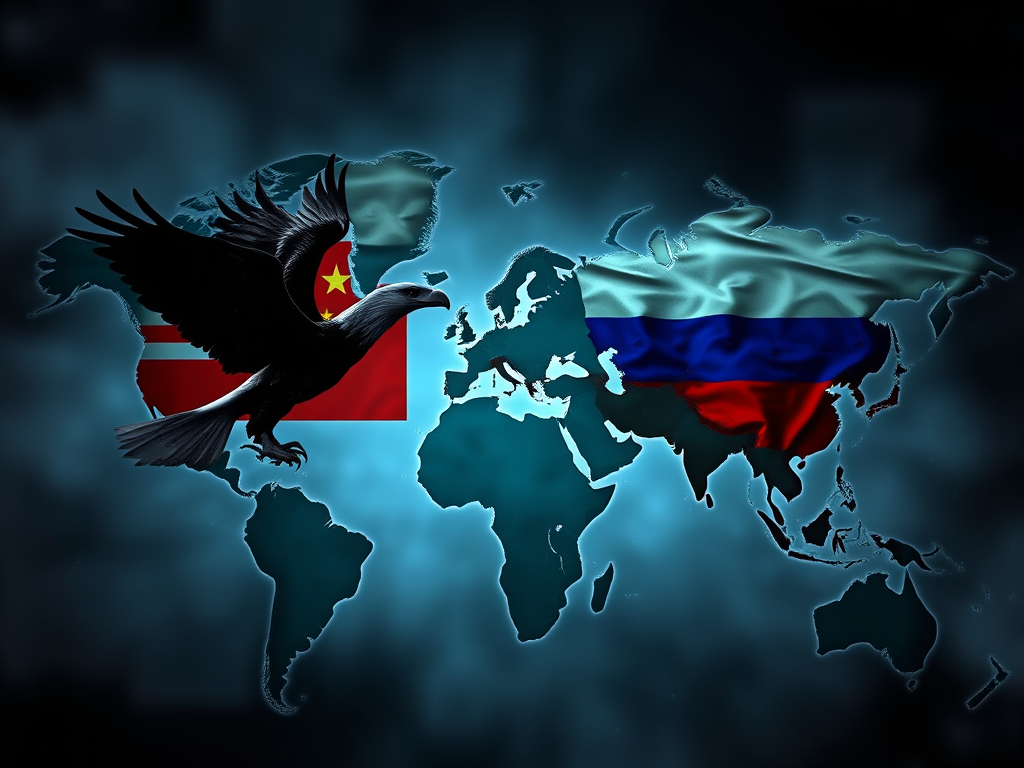
In the following pages, we will analyze these seven fronts of Israel’s wars to understand the possible risks of conflict escalation — or, conversely, the possible outcomes of peace. We will also examine the repercussions at the regional and global geopolitical level, given that all the great powers and would-be powers are involved in the Middle East: from the United States to Russia, from Europe to China, from Israel to Saudi Arabia, from Turkey to Iran. And given that, in the new world order Trump seeks to construct, the conflicts — “hot” like those in Gaza and Ukraine, and “cold” like those in Taiwan — are all interconnected and will have to be negotiated among the great powers: the United States, Russia, and China. In the coming months, the new administration will not only seek an agreement with Russia on Ukraine but will also insist on defining the division of spheres of influence in the Middle East, Europe, and the rest of the world — albeit always under American hegemony.
Gaza: The Central Front of Israel’s War
Gaza is the symbolic epicenter of Israel’s wars, the place where the conflict reaches its highest level of intensity and where the stakes are existential. For the Israeli government, the elimination of Hamas is a national priority, not only to prevent future attacks but to demonstrate to other enemies — Hezbollah in Lebanon, the militias in Syria and Iraq, the Houthis in Yemen, and above all Iran — that Israel will tolerate no threat to its existence.
The military operations in Gaza — whether under Netanyahu, Bennett, Lapid, or Netanyahu again — have followed a pattern of massive airstrikes, targeted incursions, and, when deemed necessary, ground operations designed to destroy Hamas’s command-and-control infrastructure. The 2023–2024 war marked a leap in scale: the goal was no longer to “mow the grass,” as the Israeli military doctrine used to say, but to uproot Hamas entirely, dismantle its military capacity, and create the conditions for a new security and administrative order in the Strip.
The human cost has been devastating. Tens of thousands of civilians have died, and the destruction of infrastructure has been almost total. The international community has repeatedly demanded a ceasefire, but Israel has refused, arguing that any pause would allow Hamas to regroup and that the security of its citizens takes precedence over any other consideration. The United States, under Trump, has consistently backed Israel, vetoing resolutions at the UN Security Council and blocking initiatives for an international intervention force that would have limited Israeli freedom of action.
The “day after” remains the great unknown. Who will govern Gaza once Hamas is dismantled? Netanyahu has rejected any role for the Palestinian Authority, which he considers corrupt and ineffective, and has proposed a long-term Israeli security presence combined with a civil administration supported by Arab states considered moderate. Egypt, Saudi Arabia, the Emirates, and Jordan have expressed skepticism, fearing that they would be forced to take responsibility for Gaza’s two million inhabitants without having real decision-making power. The United States supports a multinational arrangement but wants to avoid a long-term Israeli occupation that would further isolate Israel internationally and undermine the Abraham Accords.
From a geopolitical perspective, Gaza is also the theater where Israel tests new weapons systems, from precision munitions to AI-supported battlefield intelligence, and where it demonstrates to its allies and enemies that it can fight prolonged wars on its borders without collapsing internally. But every month of war increases the risk of escalation on other fronts: Hezbollah opens fire in solidarity, pro-Iranian militias in Iraq launch rockets, the Houthis strike Red Sea shipping, and Iran threatens to activate all its proxies simultaneously to force Israel into a multi-front war.
The war in Gaza is therefore not a local conflict but a node in a regional network of wars. Its outcome will have a decisive impact on the security architecture of the Middle East, the credibility of the Abraham Accords, and the balance of power between Israel and Iran.
The West Bank: The Other Front of the Conflict
While Gaza absorbs most of the world’s attention, the West Bank remains the decisive front for the future of the Palestinian question. Here, the Israeli strategy has been one of progressive territorial expansion through settlements and of military control through continuous raids, roadblocks, and targeted operations against militias and armed groups.
The Trump administration’s recognition of Jerusalem as Israel’s capital and its declaration that settlements are not illegal have encouraged Israel to accelerate the construction of new housing units, particularly in strategically significant areas such as the E1 corridor near Jerusalem and in the Jordan Valley. The objective is to create irreversible “facts on the ground” that would make the establishment of a contiguous Palestinian state practically impossible.
The Palestinian Authority, weakened and delegitimized, appears incapable of stopping this process or of offering a political horizon to its population. Corruption, authoritarian practices, and the absence of elections for more than fifteen years have eroded its credibility, especially among younger generations, who see armed struggle as the only option. This has led to the rise of new militant groups, less structured than Hamas but equally determined, in Jenin, Nablus, and Tulkarem.
Israel’s response has been one of constant pressure: arrests, demolitions, and incursions aimed at dismantling these networks before they can coordinate a new intifada. The result is a spiral of violence that risks exploding into a generalized uprising. The Trump administration has made it clear that it would support Israel in the event of a large-scale operation to reassert full control over the West Bank, framing it as part of the global war on terror.
From a geopolitical perspective, the West Bank is the key to the normalization process with Arab states. As long as images of raids, deaths of civilians, and land confiscations circulate on satellite channels and social media, it will be difficult for Arab governments to justify an open alliance with Israel. The West Bank is therefore not only a security challenge for Israel but also a diplomatic one: without a minimum of political horizon for the Palestinians, the Abraham Accords risk stagnating.
Lebanon: The Northern Front and the Hezbollah Dilemma
Lebanon remains the most volatile and dangerous front because of Hezbollah’s military power and its strategic alliance with Iran. The Shiite militia possesses an arsenal of over 100,000 rockets, many of them precision-guided, capable of striking anywhere in Israel. For the Israeli general staff, this represents the most serious threat to national security, even greater than Hamas.
The Israeli strategy has been one of “war between wars”: a campaign of constant attrition that includes airstrikes on arms depots and convoys coming from Syria, targeted assassinations of Hezbollah commanders, cyber operations, and psychological warfare aimed at undermining the group’s morale and its support among the Lebanese population. These actions have so far prevented Hezbollah from dramatically increasing its missile capabilities, but they have not eliminated the threat.
Hezbollah, for its part, calibrates its actions carefully: it fires in solidarity with Gaza, allows limited clashes along the border, but avoids crossing the threshold that would trigger a full-scale war like that of 2006. The economic collapse of Lebanon, the ongoing political crisis, and pressure from parts of the population make an all-out confrontation risky, even for the Party of God, which must balance its identity as a “resistance movement” with the need to preserve its status as a key political actor within Lebanon.
Trump’s policy has been to give Israel maximum freedom of action, even at the risk of escalating the conflict. In the event of a new war, the United States would provide political cover and military support, as it did in 2006, but with even greater determination to ensure that Hezbollah is pushed north of the Litani River and that its missile arsenal is destroyed. The goal would be to achieve a decisive strategic result that would change the balance of power in the north for decades.
However, the risk of a regional escalation is high. A major Israeli offensive in Lebanon could provoke Iranian retaliation in Syria, Iraq, and even the Gulf, forcing the United States to intervene directly. Russia, which maintains a military presence in Syria, would have to decide whether to allow Israeli operations or to oppose them to preserve its credibility as an ally of Damascus and Tehran. The entire regional chessboard could thus be set ablaze.
Syria: The War Between Wars and the Risk of Regime Collapse
Syria is the theater where Israel’s strategy is most openly offensive and preventive. Since the start of the civil war in 2011, Israel has conducted hundreds of airstrikes against Iranian targets, weapons depots, and Hezbollah convoys, with the aim of preventing the creation of a permanent military infrastructure that would allow Tehran to establish a land corridor from Iran through Iraq and Syria to Lebanon.
The so-called “campaign between wars” has become a central pillar of Israeli security doctrine: by striking before threats materialize, Israel seeks to avoid a multi-front war that would strain its military capabilities. These operations have been facilitated by a tacit understanding with Russia, which controls much of Syrian airspace: Moscow has tolerated Israeli raids as long as they do not endanger Russian personnel or threaten the survival of the Assad regime.
The Trump administration has supported this strategy, maintaining a small U.S. military presence in eastern Syria — officially to continue the fight against ISIS, but in reality, also to monitor Iranian movements and to keep a lever on Damascus’s future. Trump has repeatedly stated that he does not want to engage in nation-building in Syria, but at the same time has authorized targeted operations, such as the killing of ISIS leader Abu Bakr al-Baghdadi in 2019, to show that American presence still matters.
The possibility of a collapse of the Assad regime is the great unknown. If Damascus were to fall, Israel would likely try to create a buffer zone in the south, possibly with the cooperation of local Druze militias, to prevent hostile forces from approaching the Golan Heights. However, regime collapse could also produce chaos, with the proliferation of jihadist groups and the risk of a direct confrontation between the various powers present in Syria: Iran, Turkey, Russia, the United States, and Israel itself.
From a geopolitical perspective, Syria is the crossroads of all Middle Eastern conflicts. Its fate will determine not only the balance of power between Iran and Israel but also the level of Russian influence in the region and the possibility of Turkey consolidating a sphere of influence in the north. For this reason, Trump’s second administration will likely continue to support Israel’s freedom of action while avoiding being dragged into a full-scale confrontation.
Iraq: The Arena of U.S.–Iranian Rivalry
Iraq is the place where U.S.–Iranian rivalry manifests itself most clearly and where Israel has increasingly taken action to defend its own security interests. Since the defeat of ISIS, Iraq has become the stronghold of the Shiite militias linked to Tehran, many of which are formally integrated into the Popular Mobilization Forces (PMF), a state-sanctioned umbrella organization. These groups control large portions of territory, border crossings with Syria, and weapons depots, and they periodically attack U.S. bases and Israeli-linked targets.
For Israel, these militias represent a direct threat because they are part of the supply chain that arms Hezbollah and other proxies. For this reason, the Israeli air force has conducted covert operations and airstrikes against weapons convoys and depots inside Iraqi territory — operations often attributed to “unknown aircraft” but widely recognized as Israeli actions. These strikes aim to cut the “land bridge” that Iran is trying to build from its own territory to Lebanon.
The Trump administration, while reducing the number of American troops in Iraq, has maintained a residual force dedicated to intelligence, special operations, and air support. This presence serves both to prevent an ISIS resurgence and to counterbalance Iranian influence. Trump’s position has been to avoid getting bogged down in a large-scale conflict but also to respond forcefully to attacks on U.S. personnel, as demonstrated by the decision to kill Qasem Soleimani in Baghdad in January 2020.
The risk is that a miscalculation could lead to an escalation that would engulf the entire region. The Iraqi government, caught between its alliance with the United States and its dependence on Iran, struggles to maintain a balance. Pro-Iranian militias, emboldened by their integration into the state apparatus, could decide to push harder to expel U.S. forces, triggering a spiral of retaliation that would also involve Israel.
From a geopolitical perspective, Iraq is the linchpin of Iran’s regional strategy. Losing control over Iraqi territory would mean losing the ability to threaten Israel from multiple directions and to support Hezbollah in a sustained manner. For this reason, Israel and the United States are likely to continue to coordinate their actions to keep Iranian influence in check, even if this means a prolonged “gray war” fought in the shadows.
Yemen and the Red Sea: The Strategic Maritime Front
The war in Yemen, often considered a “forgotten conflict,” has taken on renewed geopolitical importance due to the attacks by the Houthis on shipping routes in the Red Sea and Bab el-Mandeb Strait. These attacks threaten one of the world’s key maritime choke points, through which a large portion of global trade and energy flows pass, including supplies critical to Israel.
For Israel, the Houthis are not a distant problem but an integral part of the Iranian network of proxies. Their capacity to launch missiles and drones capable of threatening Eilat or commercial shipping makes them a strategic concern. For this reason, Israeli intelligence and navy have intensified their cooperation with the United States and the United Kingdom to monitor and, if necessary, neutralize the Houthis’ threat.
The Trump administration has fully supported this approach, reinstating aid and intelligence cooperation with Saudi Arabia and the United Arab Emirates after the cooling of relations under previous administrations. Washington considers the Houthis a terrorist organization and sees in their attacks a direct challenge not only to regional allies but to global freedom of navigation.
The Red Sea has therefore become an extension of Israel’s security perimeter. The construction of new radar and surveillance systems, the presence of Israeli submarines, and the establishment of joint operational mechanisms with Egypt and Gulf countries are all aimed at ensuring that this vital maritime artery remains open.
From a geopolitical perspective, the conflict in Yemen is also a test case for the ability of Arab–Israeli normalization to produce concrete security cooperation. If Israel, Saudi Arabia, and the Emirates can jointly contain the Houthis, it would be a signal that the Abraham Accords are not just diplomatic documents but the foundation of a new regional security architecture.
Iran: The Strategic Adversary
Iran is the center of gravity of all Israel’s wars and the key to understanding the regional conflict system. For Netanyahu, Tehran represents an existential threat because of its nuclear program, its missile arsenal, and its network of proxies deployed from Lebanon to Yemen. For Trump, Iran is the main enemy of the United States and the principal obstacle to a Middle East fully aligned with American interests.
The Trump administration’s decision in 2018 to withdraw from the Joint Comprehensive Plan of Action (JCPOA) and to launch a campaign of “maximum pressure” marked the beginning of a new phase in the confrontation. Economic sanctions have severely affected the Iranian economy, causing a sharp decline in oil revenues and a currency crisis. At the same time, the killing of General Qassem Soleimani in January 2020 delivered a heavy blow to the Quds Force and to Iran’s capacity to coordinate its regional operations.
Israel has complemented this campaign with a series of covert operations: assassinations of nuclear scientists, cyberattacks on enrichment facilities, and sabotage of military sites. These actions have delayed but not stopped Iran’s nuclear progress, which, according to various intelligence estimates, has brought Tehran to the threshold of becoming a “nuclear-capable state.”
The risk of a direct confrontation remains high. If Iran were to cross the nuclear threshold or if one of its proxies were to inflict massive casualties on Israel, the latter could decide to launch a large-scale preventive attack, possibly with U.S. support. Such an operation would almost certainly trigger a regional war involving Lebanon, Syria, Iraq, and even the Gulf.
From a geopolitical perspective, Iran is both a threat and a necessary interlocutor. Without some form of understanding with Tehran, it will be impossible to stabilize Iraq, Syria, Lebanon, or Yemen. But negotiating with the Islamic Republic from a position of strength is precisely the goal of Trump’s strategy: to force Iran to choose between economic collapse and a new agreement that limits its nuclear and ballistic ambitions and reduces its support for terrorist organizations.
Bibliography
Georgetown Journal of International Affairs. “The Fall of Bashar al-Assad.” 2025.
League of Arab States. Cairo Plan for Early Recovery and Reconstruction. 2025.
Arms Control Association. “Israel and U.S. Strike Iran’s Nuclear Program.” 2025.
Reuters. Correspondences, 2024–2025, on Gaza, Iraq, Yemen, and Iran.
AP News. Reports on Houthi Attacks in the Red Sea.
International Criminal Court (ICC) & International Court of Justice (ICJ). Documents on Rafah and Arrest Warrants. 2024.
European External Action Service (EEAS). Framework for Gaza Reconstruction. 2025.
United Nations OCHA. Gaza IPC Analysis. 2025.
Security Council Report. Yemen Monthly Forecast. 2025.
World Bank. Iran Economic Monitor. 2025.
International Institute for Strategic Studies (IISS). The Military Balance 2025 and Iran and the Axis of Resistance.
International Crisis Group. Dossier on Gaza, Lebanon, and Syria. 2025.





Leave a Reply