


Are Americans on the Verge of a Civil War?
In this final week before the November 5 presidential election, American and international public opinion is focused entirely on the polls, which show an unprecedented dead heat between the two candidates in what is one of the most uncertain elections in U.S. history. Considering the limits of presidential powers, the candidates’ programs, and the inertia of the bureaucratic apparatus, we can predict that — regardless of the outcome — little will change in the domestic political landscape. The change of course will likely concern areas such as the economy and taxes, healthcare and welfare, social justice and civil rights, as well as energy and environmental policies. Slightly more could change in foreign policy, particularly regarding relations with China, Europe, and NATO, as well as positions on the conflicts in the Middle East and Ukraine, though a dramatic reversal is unlikely.
What should most worry global public opinion is not this last week of campaigning nor the fluctuations in the polls, but rather the weeks that will follow, and the far more important issue of whether the loser will accept the result. A national Rasmussen survey reports that 41 percent of voters believe the United States could face a civil war, especially if Trump were to lose the election. Are the peaceful and “gentlemanly” transfers of power truly over, following the January 6, 2021, attack on the Capitol? How did we reach this delegitimization of the electoral process and of the Republic’s institutions?
The search for the origins of this phenomenon takes us back decades. Delegitimization is a gradual, complex, and stratified process that has unfolded over many years.
Already in 1965, the Voting Rights Act — which expanded the democratic rights of minorities in response to segregationist practices upheld by local and state institutions that for decades had deprived African Americans of the right to vote and equitable participation in public life — provoked a strong reaction among segments of the white conservative population, especially in the South, fueling resentment toward the federal government and its “interference” in state affairs.
In 1971, the publication of the Pentagon Papers revealed that several administrations had misled the public about the true situation in Vietnam. This episode marked a significant loss of trust in government institutions, especially the executive branch, and was one of the first moments when a broad swath of the population began to view the government as an entity operating in secret and against the interests of its citizens.
In 1974, the Watergate scandal — an attempt to cover up campaign irregularities involving President Nixon — became one of the defining moments of mistrust in the presidency and the executive branch, as it revealed systemic corruption at the highest levels of government and further spread the perception that democratic institutions were profoundly fallible and manipulable.
In the 1980s, under President Reagan, a new phase of institutional delegitimization took shape, particularly targeting the federal government. Reagan promoted the idea that government itself was the problem, not the solution, claiming that federal institutions were too big, inefficient, and obstructive to economic and personal freedom. This rhetoric had a lasting impact, fueling anti-government sentiment among conservatives and libertarians. Furthermore, the deregulation of the economy and the reduction of the welfare state were accompanied by a growing discrediting of institutions, which were perceived as inefficient and unable to meet the population’s needs.
In the 1990s, Newt Gingrich spearheaded a radicalization of political discourse. His strategy, culminating in the 1994 “Contract with America,” transformed the Republican Party into a near-permanent opposition force to the federal government, using incendiary rhetoric against institutions and promoting extreme partisanship. This led to growing distrust between political factions and among voters, who increasingly saw government as hostage to partisan interests.
The 2000 presidential election between George W. Bush and Al Gore represented another critical moment in the delegitimization of electoral institutions. The battle over Florida and the Supreme Court’s involvement, which halted the recount, led many to perceive the system as manipulated. The Court’s decision, interpreted by many as politically motivated, delegitimized the electoral process and created new resentment toward institutions.
The September 11, 2001, attacks led to a new phase of federal power expansion with the Patriot Act and the “war on terror.” These developments heightened distrust among many Americans — especially progressives and libertarians — toward institutions perceived as increasingly intrusive and authoritarian. Allegations of civil rights violations and the opaque management of the wars in Iraq and Afghanistan — especially the lies about weapons of mass destruction — fed a growing sense of alienation.
More broadly, beginning with the 2000 election, discourse on voter fraud became a recurring theme, particularly in the Republican Party. Despite the lack of concrete evidence, many GOP leaders continued to argue that the electoral system was vulnerable to massive fraud, pushing through increasingly restrictive voting laws. These claims deepened the perception that elections could be manipulated, laying the groundwork for the climate of skepticism that would explode in 2020.
After the 2008 financial crisis, the Tea Party Movement emerged as a right-wing populist group that harshly criticized the federal government for its bank bailouts and economic interventions. Although initially focused on fiscal issues, the movement quickly adopted anti-establishment rhetoric, denouncing government institutions as corrupt and detached from “authentic” American values. This rhetoric laid the foundation for the more extreme populism that has characterized U.S. politics in recent years.
Donald Trump’s candidacy and subsequent election in 2016 marked a turning point in this process. Trump consistently attacked institutions — from federal agencies to the media — accusing them of being corrupt and controlled by an “elite” conspiring against the people. His anti-establishment rhetoric, combined with support from extremist groups and conspiracy theorists such as QAnon and figures like Rudy Giuliani, Sidney Powell, and Steve Bannon, accelerated the delegitimization of democratic institutions. In addition, aggressive gerrymandering — primarily by Republicans in states like North Carolina, Wisconsin, and Texas — restrictive voting laws, foreign interference, and the winner-takes-all Electoral College system have all fueled distrust in electoral outcomes.
Among the most important agents of this delegitimization, beyond the responsibility of parties and politicians involved in the events mentioned above and the Tea Party Movement, are far-right groups and militias such as the Proud Boys and the Oath Keepers, which have fueled anti-government, anti-globalist, and conspiratorial narratives.
Media networks and figures also bear significant responsibility. Fox News and other media outlets, such as Newsmax and One America News Network, have played a crucial role in fomenting distrust toward American institutions. They amplified Trump’s claims regarding the 2020 elections and frequently spread conspiracy theories. Commentators such as Tucker Carlson and Sean Hannity have been key actors in creating a climate of hostility toward the federal government, the liberal elite, and mainstream media. Online platforms like 4chan, 8chan, and Facebook groups have facilitated the spread of conspiracy theories; the aforementioned QAnon movement had a major impact in promoting the narrative that a global cabal was orchestrating secret plots against the American people, reinforcing the idea that the institutional system was fundamentally corrupt.
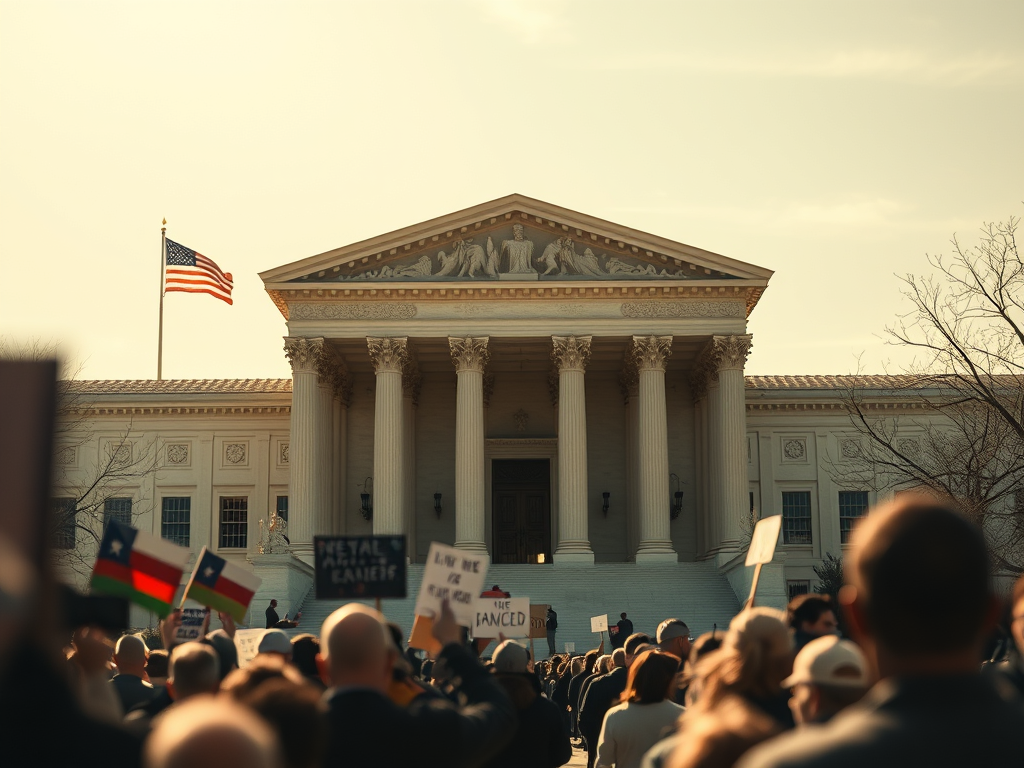
The delegitimization of the electoral process and institutions, combined with growing political polarization and mutual accusations of electoral irregularities, could have significant consequences after the upcoming vote. The most likely scenario is a contested result that could lead to an increase in protests and social tension, similar to what occurred after the 2020 elections, culminating in the assault on the Capitol.
A contested outcome would immediately trigger a series of legal battles at the local, state, and federal levels, with appeals to the Supreme Court or other courts to annul or confirm election results. This could prolong uncertainty for weeks or even months. If legal disputes drag on without a clear resolution, institutional paralysis could occur. The start of the new administration could be delayed, leaving the country in a period of political uncertainty that would hinder the peaceful transition of power.
Internationally, a delegitimized election could weaken the U.S. position. Rival powers such as Russia and China could exploit the situation to challenge America’s democratic legitimacy and diminish its moral authority to promote values like global security, free trade, rule of law, and human rights abroad. Foreign actors might attempt to exploit internal divisions through disinformation campaigns and cyberattacks to amplify political chaos, taking advantage of America’s perceived weakness during this period.
Domestically, the intensification of delegitimization could fuel authoritarian tendencies. In a scenario of extreme polarization with a paralyzed Congress, both parties might feel compelled to strengthen their control through more centralized and authoritarian measures to ensure order, further feeding the cycle of distrust and tension. There could be greater reliance on executive power to bypass Congress and govern by decree.
On October 23, speaking to a crowd at a rally in Gwinnett County, Georgia, Trump made no effort to hide his authoritarian aspirations. He suggested prosecuting 60 Minutes for the editing of an interview with Harris — as he has already threatened other media outlets, political opponents, and supposed “internal enemies” — and made the startling claim that gang members were taking over Times Square with weapons “that even the U.S. military does not possess.” “But we have guys who want to deal with them, and they will be allowed to do it, and we will drive them out of here”. Once again, he promised to carry out the largest deportation operation in history. He also stated that he would invoke the Alien Enemies Act of 1798, which would give him the authority to detain, transfer, or deport foreigners deemed enemies. Finally, he called for the death penalty for any migrant who kills an American citizen.
Statements of this kind are already having consequences and seem to be preparing the ground for a potential authoritarian turn. Nearly half of voters are skeptical that the American experiment in self-government is functioning. Forty-five percent believe the country’s democracy is underperforming and does not adequately represent ordinary people, according to a recent New York Times/Siena College poll. Three-quarters of U.S. voters say democracy is under threat, though their perception of the forces endangering it varies widely along partisan lines. And a majority of voters believe the country is plagued by corruption, with 62 percent saying the government works mainly for itself and the elites rather than for the common good. Delegitimization has left 58 percent of voters convinced that the nation’s financial and political systems need major changes or a complete overhaul.
A movement within the Republican Party, fueled by disinformation about Trump’s 2020 loss, has taken control of many of the boards that certify elections. This could create chaos in the coming weeks. There is now an army of election officials — who believe Trump’s continuing claims that the democratic process is rigged — ready to reject the vote.
For now, as we await the results, the only possible conclusion is that the intensification of delegitimization is exacerbating the social divisions and fault lines of American society, further undermining social cohesion.fault lines of American society, further undermining social cohesion.


Leave a Reply