


The democratic socialist’s Senate primary victory reveals a Florida very different from the one defined by Trump and Rubio, even on Cuba.
The surprise is not simply that Angie Nixon defeated Alexander Vindman. It is where and how she did it.
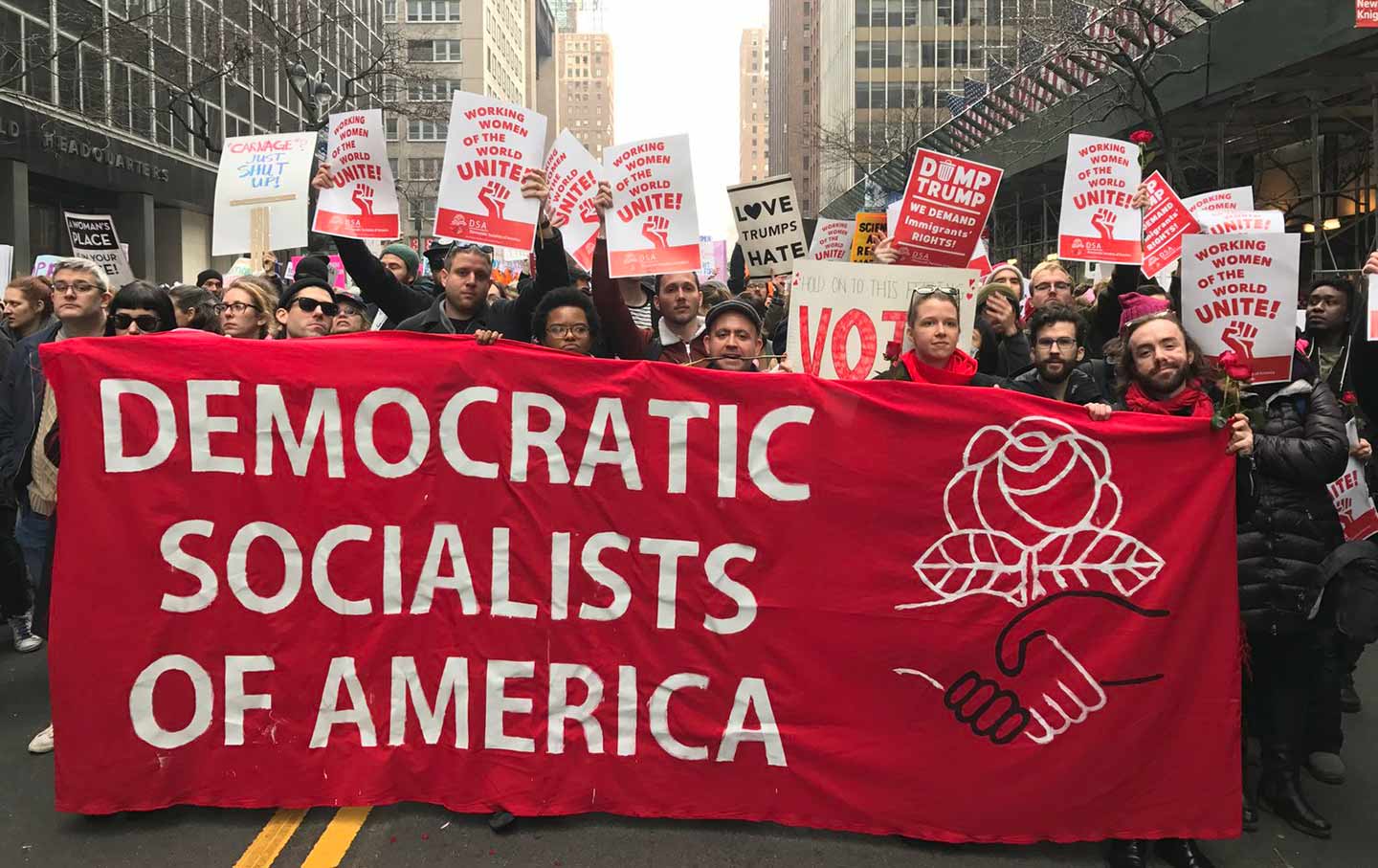
Vindman entered the race with national name recognition built during Donald Trump’s first impeachment, a far larger donor network, and roughly $16 million raised, compared with less than $1 million for his opponent. Nixon, a state representative from Jacksonville, was known mostly in North Florida: a mother, former union organizer, small-business owner, activist, and, only weeks before the vote, a new member of the Democratic Socialists of America. She still won the Democratic Senate primary by about twelve points. 1
The easiest reading would be to fold her victory into the Democratic left’s advance already visible in New York, Michigan, and elsewhere. But that misses what is most interesting. Nixon’s social geography is different and revealing.
Not the Florida of College Campuses
Nixon won by roughly 30 points in the counties with the lowest shares of college graduates. Vindman, by contrast, eked out only about a two-point edge in the most highly educated counties. Nixon also ran about 30 points ahead in the counties with the largest Afro-American populations, while Vindman narrowly carried the whitest counties. Age drew another sharp line: Nixon was strongest where younger adults make up a larger share of the population; Vindman did better where older adults predominate.
The same divide appears on the urban map. Nixon led by roughly 26 points in the largest population centers, while Vindman held small advantages in smaller towns and rural areas. She carried every major metropolitan area except West Palm Beach: not only her home base in Duval County, but also Miami-Dade and even Broward, where Vindman lives. Gainesville and Tallahassee, with their younger university populations, gave her especially large margins. 2
These are county-level results from a party primary; they do not tell us what percentage of Afro-American voters, low-income workers, or young people voted for Nixon. They do tell us where her message worked. And that answer matters: not only in the highly educated America of metropolitan progressivism, but also in a Democratic Florida that is poorer, Blacker, and less credentialed.
That separates Nixon’s victory from the eight progressive insurgencies that preceded it in the 2026 primaries. In recent years, American democratic socialism has often performed best among young college graduates, urban professionals, and voters with high levels of cultural capital. Nixon added another constituency: people who experience the costs of housing, insurance, health care, children, transportation, and food as a daily constraint.
This is where socialism, as a label, stops functioning mainly as a political identity and begins to look again like a demand for protection.
Sixteen Million Dollars Versus a Ground Game
How Nixon won matters as much as the result. Vindman ran much of the campaign as if the primary were a preliminary round before the real contest against Republican Ashley Moody. Nixon treated the primary as the decisive election.
She built a network of volunteers, union members, and activists, showed up in communities, traveled across the state, and knocked on doors. The New York Times described an operation short on money but rich in local connections —union-hall meetings, small neighborhood groups, and volunteer labor. In Broward, while Vindman largely avoided a direct contest, Nixon was building relationships with voters who would eventually help her carry even her opponent’s home county.
The contrast, in any case, was political before it was organizational. Nixon presented herself as a Floridian. Vindman, a recent arrival, came across as a national figure asking Florida to adopt him. She discussed homeowners’ insurance, rent, groceries, health care, wages, and local businesses. He offered a heroic biography rooted in the national struggle against Trump.
One message was territorial. The other was national. In the primary, the territorial message prevailed.
Nixon’s campaign explicitly identified Black voters — especially those over forty — young voters, union households, Democratic women, and voters along the First Coast as priority constituencies. The result suggests that segmentation was not merely theoretical.
This is where her victory connects to a broader change within the Democratic Party. Anti-Trumpism is no longer enough as a political offer. Warning that Trump poses an institutional danger can mobilize the base, but it does not answer the most basic question facing people who can no longer afford the life the United States continues to promise. Nixon replaced denouncing the opponent with a focus on affordability.
Miami-Dade and Cuba
Nixon’s victory in Miami-Dade is politically suggestive, but it needs to be read carefully.
A democratic socialist who favors changing U.S. policy toward Cuba and criticizes the embargo won the Democratic primary in the county most symbolically identified with Cuban exile politics. That shows that, within the county’s Democratic electorate, neither the socialist label nor her Cuba position was enough to stop her. It does not show that Cuban Americans as a whole have abandoned their conservative political orientation.
The primary was closed to registered Democrats. Miami’s Cuban political universe is far larger, even though recent election cycles have shifted it strongly toward the Republican Party. Nixon’s Miami-Dade result therefore tells us something about the county’s Democratic Party, not yet about the diaspora as a whole.
That distinction will become central against Ashley Moody. Republicans have an obvious weapon: collapse Nixon, democratic socialism, Cuba, Mamdani, and communism into a single rhetorical image. For many Florida voters — especially Cubans, Venezuelans, and Nicaraguans — the word “socialism” does not primarily evoke public health insurance or antitrust policy. It evokes family history.
The general election will therefore be a different experiment. Nixon will have to prove that the material content of her program can survive the label Republicans will use to define her.
What Nixon Thinks About Cuba
Nixon’s position on Cuba is more nuanced than the Republican campaign will have an incentive to acknowledge.
She has said the Cuban regime must change and that the island’s future should belong to Cubans. She is not defending Havana’s political system. But she considers the broad U.S. embargo a failed strategy, favors restoring elements of Barack Obama’s normalization policy, and has said she is open to lifting the trade embargo. Her distinction is between pressure on the regime and pressure on society: sanctions should target leaders, state apparatuses, and those responsible for repression without cutting ordinary Cubans off from food, fuel, medicine, and hospital resources.
That fits her social-populist politics. Nixon also looks at Cuba from the bottom up: what happens to families, prices, hospitals, and daily life. During July’s energy crisis, she pushed that argument further, assigning significant responsibility to U.S. policy and the blockade for worsening shortages and calling for more humanitarian assistance and international cooperation. 3
But that is also where a gap appears. Her analysis of Cuba remains overwhelmingly focused on Cuba, and Florida is missing.
The Cost Nixon Has Yet to Put at the Center
A senator from Florida cannot define Cuba policy solely by what it does in Havana.
Cuba is 90 miles away. A collapsing power grid, fuel shortages, weakened state institutions, or a political crisis would not cause suffering only on the island. They could trigger departures by sea, strain the Coast Guard, create emergencies in the Keys, concentrate people at ports, strain Miami-Dade, increase healthcare costs, create shelter needs, create public-order problems, and create new competition for resources many Floridians already believe are scarce. 4
That is the fundamental distinction between Cuban Florida and non-Cuban Florida. The first can measure the crisis on the long timeline of historical justice. The second measures it on the short timeline of capacity: people, patrol boats, hospital beds, schools, police, and days under emergency conditions.
For that reason, the most inclusive position Nixon could take is not simply “lift the embargo.” It is to prevent U.S. policy toward Cuba from making Florida the place where the costs of either success or failure fall.
That would be a genuinely Floridian position, entirely consistent with the social populism that carried her through the primary. If affordability means asking who pays for housing, childcare, or insurance. Geopolitics should ask the same question: who pays for a Cuban crisis?
Washington can tighten sanctions, support the opposition, deploy intelligence assets, encourage fractures within the regime, or try to accelerate a transition. Florida, however, will bear the consequences before other states. The Keys are not a foreign-policy abstraction. They are a fragile territorial system with limited infrastructure and finite absorptive capacity.
Over the past two months, the Trump administration has narrowed the gap between pressure and a possible transition. The CIA task force’s focus on Cuba, the latest sanctions, and Marco Rubio’s rhetoric all suggest that Washington is no longer content to wait for events on the island. It is trying to accelerate them. A geopolitical threshold can quickly become a logistical one, and the decisive tension may be between the speed of a Cuban crisis and Florida’s territorial capacity to absorb its effects. 5
Paradoxically, Nixon already has the political language to turn that question into a critique of Republican strategy. She could ask not only whether economically strangling Cuba is justified, but also whether Washington has actually prepared the resources needed should the pressure succeed.
How many Coast Guard units are there? What temporary reception facilities exist? Who pays federally for health care and school costs? What protections are in place for Monroe County? What procedures would prevent a humanitarian emergency from becoming an uncontrolled migration route? What investments do the ports need? What is the policy for Cubans intercepted at sea? How will Washington coordinate with the Bahamas, Mexico, and the rest of the Caribbean? Which federal fund would ensure that a strategy made in Washington is not financed by Florida taxpayers? That would be the geopolitical translation of affordability.
Neither Rubio nor Havana
Nixon could therefore occupy a political space that is now almost empty. On one side, Rubio and Moody present the end of Castroism as a moral and strategic victory and emphasize pressure on the regime. On the other, parts of the American left explain Cuba almost entirely through the lens of the embargo, risking the minimization of the system’s authoritarian nature, the responsibility of its elites, and the depth of the island’s internal crisis. A Floridian position should reject both simplifications.
The regime is responsible for its own political and economic failures. But the United States has no interest in turning those failures into an uncontrolled collapse. Sanctions should therefore be judged not only by their punitive power but also by their outcomes. A transition should be measured not only by how quickly a ruling group falls but also by whether ports, police, the electrical grid, food distribution, health care, and control over departures continue to function.
In Florida, the worst outcome may not be the temporary survival of a weakened regime but its sudden dissolution.
That is precisely where geopolitics and social populism intersect. Governments are judged not only by the enemies they defeat but also by the security they provide for their citizens.
The Coalition Nixon Still Has to Expand
Winning the primary does not solve Nixon’s electoral problem. It makes the problem more complex.
Her coalition was broad enough to include major urban centers, counties with larger Afro-American populations, less college-educated counties, and much of the state’s younger population. That composition challenges the assumption that the new left can survive only in highly educated progressive enclaves. Yet it remains a coalition within the Democratic Party.
In November, she will face a different Florida: older, more Republican, with far more independents and conservatives, and Latin American communities for whom the word socialism carries a hostile historical connotation.
The question, then, is whether Nixon can do what Trump did in 2016: move a material conflict beyond the traditional boundaries of her own party.
Trump took the insecurity produced by deindustrialization, blocked social mobility, and lost recognition, and gave it a national, identitarian, anti-elite language. Nixon is attempting the inverse operation: take anger over the cost of living and redirect it toward large corporations, insurers, real-estate rents, expensive health care, and concentrated economic power.
The primary proves that this can mobilize voters. It does not yet prove that it can convert them.
A Victory That Also Speaks to Cuba
The electorate that rewarded Nixon appears especially sensitive to how costs are distributed and to whether institutions protect material well-being. If the Cuban crisis accelerates, this is precisely the Florida that will ask why hospitals, schools, ports, law enforcement, and local governments should bear the consequences of a strategy made in Washington.
Nixon has already provided half the answer. She says ordinary Cubans should not indiscriminately pay the price of Washington’s conflict with the regime. The missing half is that ordinary Floridians should not indiscriminately pay the price of Washington’s strategy either.
Between Rubio’s promised liberation and the left’s denunciation of the embargo lies a more concrete political space: preventing Cuba from collapsing into Florida. That may be the position most consistent with the geography Nixon seeks to represent and with the electorate that has just given her the nomination.
Notes
1. Reuters, “In upset, Florida democratic socialist Nixon wins Democratic Senate primary,” Aug. 18, 2026; Michael Smith, Daniel Cancel and Anna J. Kaiser, “Democratic Socialist Nixon Dominates Florida Senate Primary,” Bloomberg Government, Aug. 19, 2026.
2. “Angie Nixon Notches Another Win for the Left Through Old-Fashioned Organizing,” The New York Times, Aug. 19, 2026; Axios, “Angie Nixon scores socialist breakthrough in Senate race in Trump’s Florida,” Aug. 19, 2026.
3. EFE, “Aspirante demócrata al escaño de Marco Rubio busca el voto cubano,” Aug. 15, 2026; Angie Nixon for U.S. Senate, “U.S. Senate Candidate Angie Nixon Calls for International Cooperation as Cuba Faces Third Major Blackout of the Year,” July 8, 2026.
4. Reuters, “Cuba begins to restore power to Havana following nationwide blackout,” July 6, 2026. On the subsequent tightening of sanctions, see Reuters, “US imposes more sanctions on Cuba, including mining sector,” Aug. 20, 2026.
5. Adam Entous, “C.I.A. Sets Up Secret Cuba Task Force as Trump Pressures Havana,” The New York Times, Aug. 5, 2026; Reuters, “US imposes more sanctions on Cuba, including mining sector,” Aug. 20, 2026.


Leave a Reply