

'/%3E%3Cpath%20fill='%23b2b2b2'%20d='M241%20382q0%2016%2017%2026%2017%2011%2042%2011t42-11q16-11%2017-26V269H241'/%3E%3Cpath%20fill='%239f7e00'%20d='M241%20379q0%2014%208%2023%209%209%2021%209%2014%200%2021-9%209-9%209-23V269h-59'/%3E%3Cpath%20d='M241%20339v-70h59v110q0%2014-9%2023l-6%205v-68h-15v72q-8%200-14-4v-68zm59%2040c0%2022%2015%2032%2029%2032%2021%200%2030-18%2030-32v-40h-59'/%3E%3Cpath%20fill='%239f7e00'%20d='M266%20277v5h2v12h-3v-5h2v-5h-9v5h2v5h-4v9h3v18h-5v10h34v-10h-5v-18h3v-9h-4v-5h2v-5h-9v5h2v5h-3v-12h2v-5zm42%20101q0%2010%206%2017%206%206%2015%207%2010-1%2016-7%206-7%206-17v-29h-43'/%3E%3Ccircle%20fill='%230044ad'%20cx='329.5'%20cy='372'%20r='6'/%3E%3Cellipse%20fill='%230044ad'%20cx='300'%20cy='340'%20rx='16'%20ry='21'/%3E%3C/svg%3E)
Decoding a crisis that will not end with a bomb
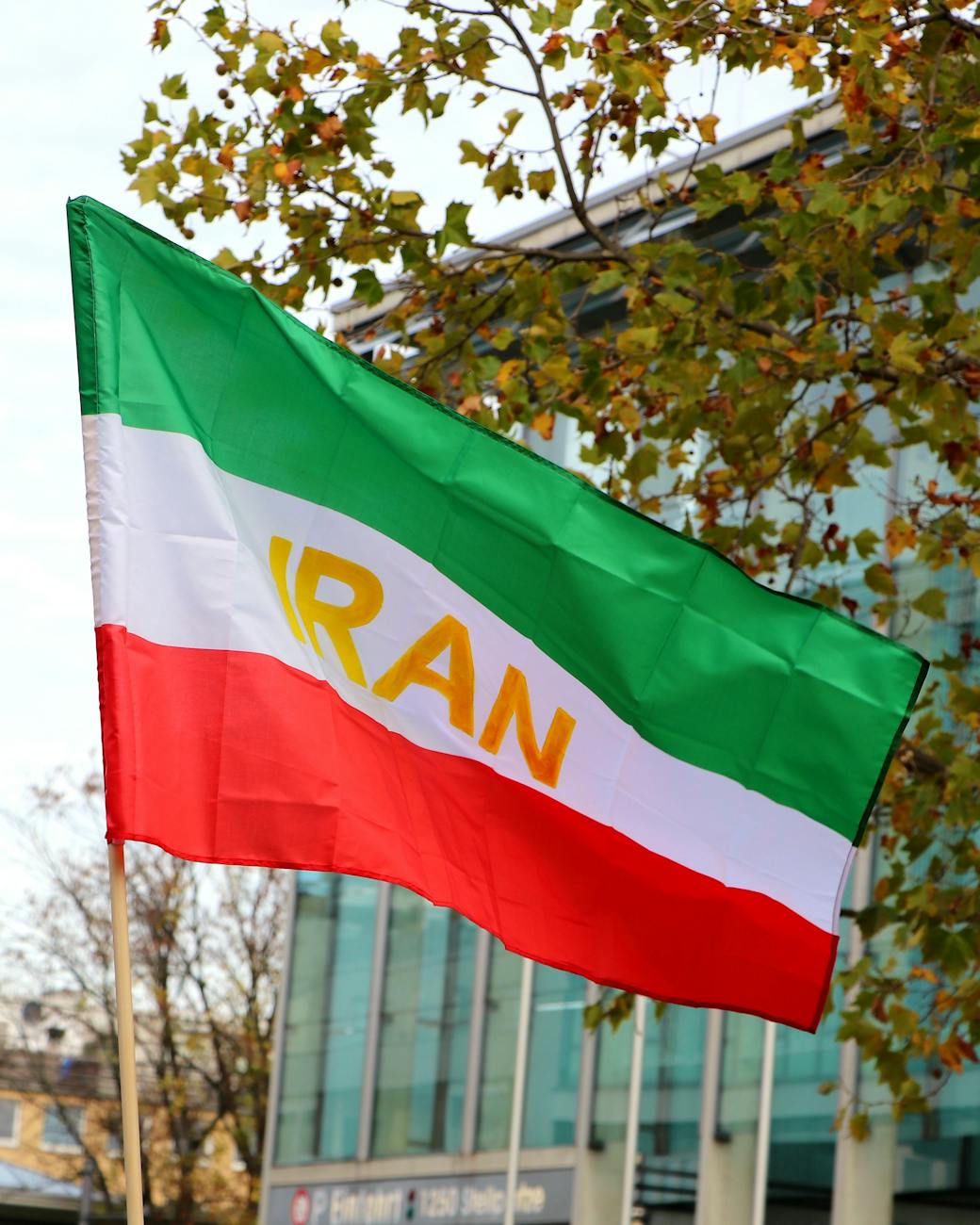
In January 2026, Iran is a country that turns “opaque” again: protests born of a mix of economic collapse, political delegitimization, and repression that — according to circulating testimonies and estimates — has produced casualties on the scale of tens of thousands and, above all, a massive interruption of communications that has made the crisis a partially invisible event, therefore easier to manipulate.
What happens in Iran is not only a revolt against a regime: it is an internal crisis that becomes a field of action (and narration) for external actors. The point is not to deny the authenticity of Iranian discontent; rather, it is to argue that when a society enters a breaking phase, power centers beyond the borders seek to steer the fracture because it is a geopolitical lever.
The “playbook”: how to try to split a state without invading it
There is a recurring script: a sequence of tools designed to make an adversary collapse from within without incurring the political cost of a major war. In Iran, the role and objective of the US–Israel “tag team” are explicit: weaken the regime until it becomes replaceable and, in the process, wreck the country, that is, turn Iran into a permanent problem (another Syria: not necessarily conquered, but disarticulated).
The method does not begin with bombing but with a combination of economic pressure, information warfare, and covert operations: raise the cost of living, turn discomfort into rage, push the street beyond the threshold of reform and toward the perception of total delegitimization of institutions, and finally present the outcome as “inevitable.” In this reading, sanctions are not a moral accessory (“punish the bad guys”) but a weapon of attrition that produces exploitable social fractures.
Why the strategy doesn’t close: the paradox of besieged sovereignty
The script often produces the opposite effect. When external interference is perceived as credible, the regime can reframe the crisis as a sovereignty war: not “us against them” (regime against people), but “us against the outside” (state against aggression). It is the old reflex of power politics: a siege, real or perceived, tends to recompact segments of society and provide a narrative justification for repression.
Hence, the centrality of the blackout. The digital shutdown is not only censorship: it is a control architecture designed to disrupt coordination, testimony, and accountability, and to make political violence more “manageable.” Conflict, without images and without a network, becomes easier to domesticate and harder to verify.
“Bombing makes no sense”: the limits of remote war
Top-down “punishment” rarely delivers the promised result when the real objective is regime change. The question is not “can we strike?”, but “what happens next?”.
A direct attack on Iran would trigger a predictable response across three levels: strikes against Israel, strikes against U.S. assets in the region, and pressure on energy arteries (starting with the Strait of Hormuz), with systemic effects. This is not a “catastrophist” forecast: it is a reading of incentives and capabilities in a theater where Iran has asymmetric tools and where deterrence rests on the ability to raise the price of intervention.
Just as the attack seemed imminent, the window closed again: not out of goodwill but calculation. The cost of intervention rose. Without coordination, protests waned. Israel judged its ability to absorb a missile counterstrike insufficient and chose to brake.
The most interesting strategic consequence: fear of the “tag team” in Gulf states
The Iranian crisis is producing a perceptual reversal in the Gulf. If Iran is “wrecked,” the region does not become more stable: it becomes more unpredictable. If unpredictability is associated with the US–Israel tandem, Gulf states may begin to see the tandem — more than Iran — as the main destabilizing variable. There is no idealism here: there is the sheer survival instinct of rentier regimes — allergic to long wars, and state collapses that export militias, refugees, and energy shocks — that have sent the message to Washington.
In this framework, Iran is not only the site of an internal tragedy. It is the laboratory of a historical phase in which the West can no longer impose order with its preferred tools (sanctions, narratives, “surgical” strikes), while adversaries learn to turn vulnerability into deterrence: not to win, but to make it prohibitively costly to be “fixed” from the outside.


Leave a Reply