


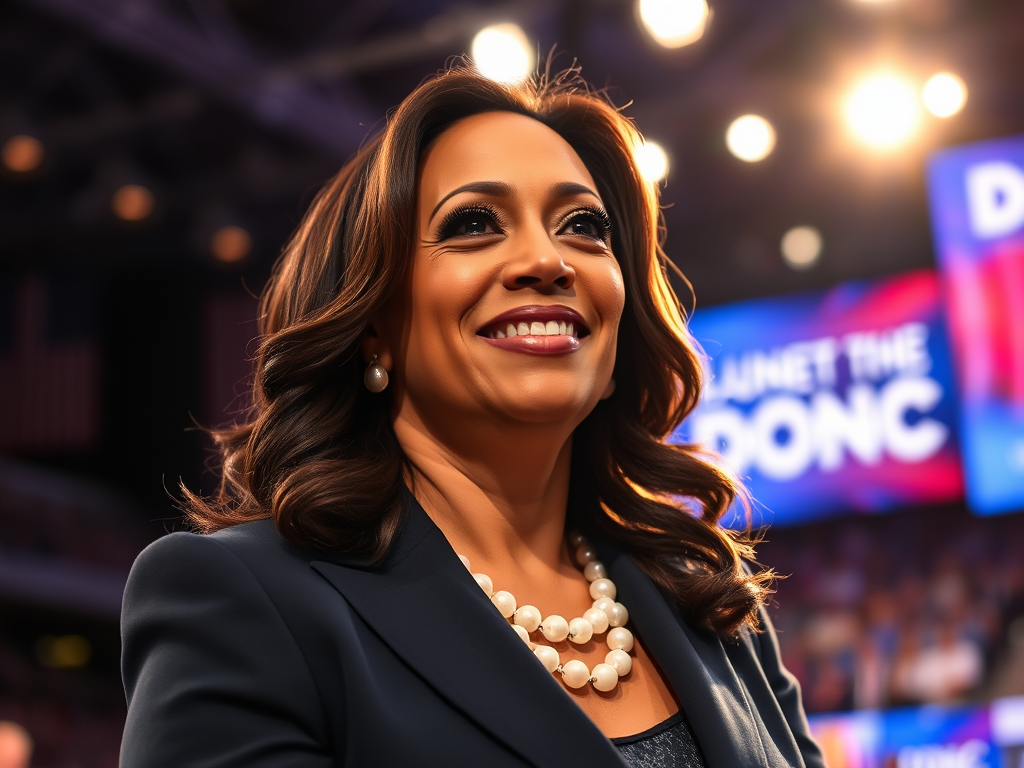
Part I: The Road to the DNC
August 16, 2024
Until just a few weeks ago, the judgment on the Vice President of the United States was summed up by adjectives such as “unpopular”, “incompetent”, and a “D.E.I. candidate”. 1 This perception of Harris echoed in the press and among analysts — Democrats, Republicans, and even independents — for more than three years. 2
How, then, can we explain the momentum, enthusiasm, support, crowds, and flow of money that the presidential candidate seems to be attracting and mobilizing after July 21? 3 How is it possible that in just three weeks Kamala has managed to overturn national polling projections (49% vs. 46% in her favor, despite Robert F. Kennedy’s withdrawal and endorsement of Trump) and take the lead in decisive states such as Arizona, North Carolina, Michigan, Wisconsin, and Pennsylvania (collectively now 42% vs. 40%) while also closing the gap in Nevada and Georgia? 4
One reason is that Trump was caught off guard by the change of candidate and is struggling to find an effective strategy to confront the Vice President. Trump has begun to contest Harris’s rally turnout numbers with insults and fake news, claiming that the crowds in published photos are photoshopped. But beyond the disorientation and surprise within the Republican camp, we must ask whether Kamala’s lead is solid and lasting.
There is no doubt that for many Democrats and independents, seeing the embattled Biden removed from the presidential race was itself a source of relief. 5 But Harris is the candidate because key Democratic Party figures —such as California Governor Gavin Newsom, Michigan Governor Gretchen Whitmer, and Illinois Governor J.B. Pritzker — chose not to enter the race in the middle of a campaign that had been widely seen as already lost and with too little time left to raise the funds necessary to launch a new candidate. 6 Their decision also avoided competing with a woman who, in the public imagination, represents diversity within the party, and preserved their own chances for the post-Trump 2028 election. 7
The question, therefore, remains: how is it possible that a candidate long considered second-rate is now neck-and-neck with Trump in the race for the White House? Political explanations offer little help, especially since Harris’s surge over Trump in the polls predates the release of her platform, and she has yet to give interviews and press conferences detailing her presidential agenda. What, then, is the basis of Kamala’s supposed “magic”? To understand it, we must turn to geopolitical analysis and first define the context.
In his 2004 book, What’s the Matter with Kansas? How Conservatives Won the Heart of America, 8 Thomas Frank asked why voters — particularly those in middle-class and blue-collar America — fail to vote rationally in favor of policies that would improve their material interests. In the United States, studies across different disciplines have shown that voters do not vote rationally, but rather to express themselves, their identity, and their moral and ideological convictions, and even to exorcise their fears. 9
Is this intuitive, emotional approach to voting — based on feeling and personal connection with the electorate — what has set in motion the so-called Harris phenomenon? It is certain that from the very beginning, the Vice President’s campaign appearances have been light on substance but heavy on sentiment (in stark contrast to a political professional like Hillary Clinton, who emphasized policy proposals and establishment ties). Harris has taken the stage as Kamala, a human and empathetic figure. She has presented herself as an ordinary person: optimistic, approachable, smiling. She has restored Obama-style hope to the center of aspirations.
And she has chosen a running mate with the same characteristics and a personality that aligns closely with the middle class. Tim Walz is a teacher, a coach, and a veteran who projects a positive, affable, folksy image. Together, they continue reversing the elitist trend of thirty years of Democratic candidates from the Harvard–Yale pipeline. Now it is Republicans who draw from the Ivy League, presenting a billionaire and a venture capitalist.
Walz’s image is shaped more by his look — baseball cap and t-shirt — his love of firearms, and his TikToks about saving money by fixing car parts yourself, than by the liberal measures he passed as governor of Minnesota. 10.
It must be noted, however, that Republicans are masters of emotion-based campaigns — as proven in the 2016 and 2020 elections, and as shown by the narrative built around the attempt on Trump’s life — and they know how to generate fear and evoke strength. Trump runs his campaign on anger, resentment, and carnage, negative emotions; Harris campaigns on joy, trust, and hope, positive emotions. Is she beating them at their own game?
To understand this, we must take a step back and mention the internal conflicts the United States is experiencing in this transitional phase of its history. We must refer — although there is no space in this article to analyze them in depth — to the delegitimization of the ruling class, the mechanisms of party candidate selection, the inability of elected officials to represent their base, the progressive divergence in American lifestyles, and the migrations that lead to self-segregation. Evidence of this can be seen, for example, in the flourishing of relocation companies specializing in moving Republican families from California to Texas and Democratic families from Texas to California. 11
America’s cultural fractures are rooted in divergent conceptions of faith, the role of the federal government, social justice, women’s rights, and environmentalism. They also play out on more concrete and sharply defined issues such as abortion, taxes, health care, education, and fracking. And on these issues, Americans today often come to hate one another. This is demonstrated by physical clashes outside abortion clinics and by fierce confrontations in schools over attempts to introduce lists of banned books promoted by groups like Moms for Liberty, whose stated goal is to “close the Education Department and defund schools that are pushing Critical Race Theory, radical gender ideology, and other inappropriate racial, sexual, or political content on our children”. Trump is scheduled to speak on Friday, August 30, at a Florida rally in support of this organization.
It is also necessary to mention the decline of the middle class, caused by deindustrialization — accelerated by globalization after the dissolution of the Soviet Union — characterized by a loss of purchasing power, social status, and erosion of aspirations to achieve the American Dream. This decline has fueled the growth of phenomena such as alcoholism, depression, and opioid addiction, especially in the areas where the electoral battle is being fought: fewer than a dozen states in the Sunbelt and Midwest.
This region, in particular, is the heart of America and reflects within itself the fractures and contradictions just described. It is here that the average American lives, whose vote will decide the nation’s overall direction toward progressivism or conservatism. This means that what is at stake in this election is “the soul of America.” It is the nation’s identity, the pursuit of happiness, and the American Dream — the idea of US Greatness and American Exceptionalism. The goal is to gain enough support to win the identity battle and refound the national pact.
There are two Americas today coexisting in the Midwest, embodied by the two vice-presidential candidates (and that is why they were chosen). J.D. Vance gives voice to the anger and resentment of the post-industrial working class, suffering from the consequences of deindustrialization, struggling to find new employment, and seeing its social recognition vanish. 12 This is a pessimistic electorate, with a defeatist outlook, that ends up voting for Trump. Tim Walz, on the other hand, gives voice to the sense of community and project-oriented spirit of rural middle classes, who, while suffering, remain tied to the pursuit of happiness and the American Dream. This is an optimistic electorate, with a positive vision, ready to embrace a candidate who communicates trust and hope in the future. 13
And on this positive project, Kamala — for the moment — is winning the emotional connection battle, speaking more about values than about programs: healing, unity, community, service, integrity, pluralism, inclusion, the centrality and staunch defense of the middle class, and women’s rights — now under attack after the overturning of Roe v. Wade by the Supreme Court. On these values, Kamala appears to have succeeded in unifying and energizing the Democratic Party while at the same time presenting herself as a leader worthy of a presidential candidacy.
The extent to which the “Harris effect” on public opinion will be profound and lasting remains to be seen. The time has now come for interviews, debates, and programs. Kamala’s victory is still far from assured. We cannot forget what happened to Hillary Clinton in 2016, nor the effects of the “shy voter” 14 phenomenon, nor the functioning of the Electoral College, which does not guarantee victory to the candidate who wins the majority of the popular vote.
Part II: The Road after the DNC
August 23, 2024
There is no doubt that the renewed enthusiasm galvanizing the Democratic Party, both before and after the August 19–22 National Convention, is coming mainly from the grassroots, but not exclusively. Many enthusiastic reactions have also come from within the party apparatus. However, the young and more progressive base is not yet fully won over by “Kamala’s identity smile.” These late Millennials and early Gen Z voters — liberal and idealistic — see a beginning of renewal in the change of leadership but are protesting (including outside the United Center where the DNC took place) the party’s “subordinate” relationship with Israel and are calling for an end to the carnage in Gaza. International solidarity with the oppressed, they argue, is the value missing from the new identity Harris is promoting.
Victory for the Democratic Party is still far off, but it must be acknowledged that this wave of enthusiasm — created in such a short time and despite its limitations — has few precedents. Clearly, within the party base, there had been, perhaps unconsciously or dormant, a desire for a new future.
Harris knows this, which is why she chose Coach Walz rather than the more efficient and centrist Governor Shapiro — a choice that would have made electoral sense, particularly given the importance of Pennsylvania — had Shapiro not been radically pro-Israel, closely tied to Jewish lobbying groups, and unpopular among the younger and more progressive base for his positions on the Gaza conflict and on fracking, a central issue for young Democratic environmentalists.
At the convention, Harris and her supporters sought to communicate a message centered on three essential concepts: freedom, future, and anti-elitism. Freedom translated into concrete fears over potential authoritarian measures regarding reproductive rights, education, and inclusivity that Trump appears poised to promote. Future as a counterpoint to the nostalgic longing for the past in the conservative project and the former president’s message. And anti-elitism as a renewed focus on ordinary people, the middle class, and “normality.”
Harris celebrated the uniqueness and greatness of the United States as the result of a process that is always ongoing and never fully complete: the transformation of the country, the expansion of rights, and the realization of the nation’s original democratic and libertarian promises, thus reasserting the idea of American Exceptionalism.
In terms of foreign policy, Harris and her supporters made statements with significant geopolitical implications: strong military, deterrence, respect for allies, support for Ukraine, interventionism, when necessary, defense of democracies, and the preservation of American global hegemony. 15
In his speech, former Defense Secretary Leon Panetta, after praising — citing the assassination of Osama bin Laden — the Democratic government’s resolve to strike those who attack the United States, confirmed on behalf of the party and Harris the support for NATO allies, condemned isolationist tendencies (even quoting President Reagan), and reaffirmed Democratic commitment to the global struggle for democracy and the defense of Ukraine at all costs. He promised a military respected at home and feared abroad, implicitly underscoring the importance of deterrence and American hegemony. 16
Kamala Harris was even more explicit on hegemony and deterrence: “As commander-in-chief, I will ensure that America always has the strongest, most lethal fighting force in the world.” She reiterated key points: the centrality of defense and military modernization, a hard line on Putin and Iran, support for Ukraine and NATO allies, and the need to win the conflict — including the technological one — with China and the struggle for American global leadership. She also reaffirmed support for Israel and condemned the atrocities of Hamas, while clarifying her stance on Gaza: the bloodshed must end, and the United States is already working — and will continue to work under her presidency — for a peace agreement that guarantees Israel’s security as well as the dignity and security of the Palestinian people. This was still too little for the younger and more progressive base. Finally, she declared: “America, let us show the world who we are and what we stand for: freedom, opportunity, compassion, dignity, equity, and boundless possibilities.” 17
Part of the “aspirations” contained in Harris’s speech — if she wins the presidency — will inevitably be subject to negotiation and, if necessary, confrontation with the bureaucratic apparatus. The President’s programs can never diverge from the nation’s deep strategic interests and from the subterranean vision of the agencies that effectively govern the United States. For example, the threatened arms embargo on Israel — proposed by some progressive Democrats — has little chance of materializing, as it contradicts national strategic interests protected by the so-called “deep state.” Arms aid is untouchable, both because it sustains the U.S. defense industry and because Israel serves as a proxy — formerly anti-Soviet, now anti-Iranian — helping to keep the volatile Middle East under American hegemony.
Examining the DNC and RNC in parallel enables us to measure voter engagement and emotional connection — key elements for victory, as they were in 2016 for both Brexit and Trump’s first win.
Trump arrived at the Republican National Convention (July 15–18) with internal party opposition at a minimum, enjoying the sympathy of a political martyr under trial and the solidarity of a base enraged by his “persecution.” He presented a more disciplined campaign than in the past, with more structured rallies imbued with solemnity, full of biblical references and invocations of God. Trump understands how to connect with his base and knows that in 2020, evangelicals made up 28 percent of voters, 76 percent of whom supported him. Seventy-one percent of white voters who regularly attend religious services are his supporters, and they delivered victory to him in 2016. 18 Hence, Democrats accuse the former president: “Trump is weaponizing religion and religious symbols”. 19
This instrumentalization of faith dates to Trump’s alliance with the Tea Party in 2014. The rise of this movement in the new millennium can be seen as a consequence of the growing conservatism of the Republican base, particularly the most politically engaged segment, dating back to the Reagan years. Though conservatism is the movement’s core pillar, racial hostility has also played a significant role. The Tea Party was the primary agent — before Trump — of the GOP’s rightward shift, marking the end of central bipartisan cooperation.
The assassination attempt provided a significant opportunity to galvanize the electorate and project strength and determination. The image of Trump being dragged away by his security detail, bloodied but defiant, fist raised as he shouted “Fight!” energized the former president’s campaign, as confirmed by polling data. 20
Nevertheless, the rallies and the assassination attempt did not help the Republican convention escape the sense of bureaucratic monotony and low engagement among the party’s moderate base. The contrast with the joy and enthusiasm of the Democratic convention was stark: on one side, roll calls read like attendance sheets; on the other, votes shouted and sung aloud. On one side, the formal patriotism of the Republicans; on the other, the noisy patriotism of the Democrats, with flags waving and chants of “USA!” On one side, Trump’s negative acceptance speech; on the other, Harris’s message of hope.
The keywords used during the conventions reveal much about the emerging identities of the Democratic and Republican Parties. At the DNC, speakers used the words “freedom,” “women,” and “future” more than 200 times; “democracy,” “God,” and “mother” more than 100 times; and the noun most frequently used was “joy.” At the RNC, the word “God” appeared more than 300 times, and no other word reached 100 mentions. Other frequently used words included “inflation” and “grocery prices.” “Freedom,” “women,” and “future” were used less than half as often as they were at the DNC. Concepts used exclusively at the RNC included: “invasion,” “illegal immigrants,” “school choice,” “indoctrination,” “radical left,” and “building the wall.” Those used exclusively at the DNC included: “abortion,” “not going back,” “convicted criminal,” and “Project 2025”. 21 These conventions confirm once more that American identities are tribal, shaped by ethnicity, religion, class, and worldview.
“Project 2025” — the alleged manifesto for a future Trump presidency, drafted by close collaborators but not yet formally endorsed by the former president — is the symbol of these fractures. Its main points concern culture, faith, and lifestyle. 22
The Heritage Foundation’s Project 2025 aims to create a roadmap for the first 180 days of the new administration to reorient every federal agency around a conservative vision rapidly. The project seeks to recruit and train thousands of loyal conservatives to fill federal government positions. The American Accountability Foundation, one of the groups advising Project 2025, is compiling a list of current federal employees suspected of potentially obstructing Trump’s plans for a second term.
Many of Project 2025’s priorities align with Trump’s platform, particularly on immigration and dismantling federal bureaucracies. Both Trump and Project 2025 call for the elimination of the Department of Education and the transfer of its functions to state control. The “mandate for leadership” also includes plans to ban pornography, revoke federal approval for the abortion pill, exclude emergency contraception and male contraceptives from ACA coverage, make gender transition more difficult for adults, and eliminate the federal agency overseeing the National Weather Service (NOAA), arguing its functions should be privatized and accusing it of “climate alarmism.”
Such a purge of the bureaucracy could provoke open revolt within the federal apparatus and bring to the surface the ongoing, mostly hidden struggle between two visions of the American way of life and of U.S. foreign policy. It could destabilize U.S. foreign policy itself, producing scenarios of international instability in the short and even medium term, and potentially leading to an internal conflict — some even say on the verge of civil war, though that is unlikely.
A strong conservative movement “occupying” the institutions would certainly deepen political polarization in the country. Many already see Project 2025 as politically motivated and as a threat to democracy and transparency. Reactions from progressive and radical movements could further exacerbate tensions, leading to deeper societal divisions over identity-related issues. In summary, the conservative strategy of recruitment and training would not only immediately impact governance but could also reshape the political landscape for years to come.
Since the DNC, many independents and undecided voters have expressed their inclination to vote for Harris. 23 But the weak points in the perception of the Vice President remain: programs still too generic, and competence and experience yet to be proven. Harris and the Democrats must also confront reversals on issues such as globalization, secularization of the United States, uncontrolled free speech on social media, woke and D.E.I. culture, minority-protection norms, immigration, and women’s rights — especially reproductive rights — which Democrats have pushed to the limits and used as part of their identity for too long.
Elections since 2000 — except for Obama’s victories, driven by hope, enthusiasm, and engagement — have been decided by a handful of votes in swing states like Arizona, North Carolina, Michigan, Wisconsin, and Pennsylvania. Harris must sustain her momentum now that debates and press conferences are approaching, and she will have to discuss her programs on security and justice, civil and social rights, the economy, immigration, health care, education, and the environment. But her smile will still be necessary — the struggle is for America’s identity. Kamala has put back into play a race that seemed lost, but victory is still far off. And victory means (re)winning the heart of the middle class to redefine the American way of life.
Notes
[1] This refers to the Diversity, Equity, Inclusion (DEI) policy, which facilitates the inclusion—both in the public and private sectors—of individuals belonging to minorities defined by race, ethnicity, religion, age, and possibly (dis)ability.
[2] Between 2021 and 2024, Harris’s approval rating dropped from 50% to 35.9%. See: projects.fivethirtyeight.com, Ongoing Polling Averages. Since her candidacy announcement, her ratings have been rising.
[3] The funds raised by Harris reached $540 million as of August 24, according to data published by the Democratic Party.
[4] Data from The New York Times, based on the average of several national polls updated to August 25.
[5] The July 17 AP-NORC poll reported that only three in ten Democrats believed Biden had the mental capacity to lead the campaign and continue serving as president.
[6] A new candidate would have required an entirely new fundraising campaign.
[7] Trump will not be eligible in 2028.
[8] Thomas Frank, What’s the Matter with Kansas? How Conservatives Won the Heart of America, Metropolitan Books, 2004.
[9] See studies by behavioral psychologists such as Daniel Kahneman, Thinking, Fast and Slow, Farrar, Straus and Giroux, 2013, and social psychologists such as Jonathan Haidt, The Righteous Mind, Pantheon Books, 2012.
[10] Waltz’s liberal—sometimes even woke—legislation is analyzed by Robert Kuttner, “It Took a Village: The Making of Progressive Tim Walz,” The American Prospect, August 21, 2024.
[11] Relocation companies facilitate the move of a family unit from its place of origin to its destination and offer services such as: selling the original home, finding a new home, moving furniture and personal belongings, selecting schools, and handling administrative procedures related to the change of residence.
[12] Emotions are well-represented in Hillbilly Elegy: A Memoir of a Family and a Culture in Crisis, published by Thorndike Press in 2016.
[13] For more information on these issues, refer to Federico Petroni’s analysis in his interview on the Limes channel, dated August 8, 2024.
[14] In 2016, many Trump voters did not openly state their preference in polls. This phenomenon could repeat itself, making projections less reliable.
[15] Mark Kelly, Senator from Arizona, reiterated the position of Harris’s supporters: favoring a hard line against Putin and supporting Ukraine; backing support for service members, veterans, and troops; and endorsing the consolidation of U.S. hegemony and the global fight for democracy.
[16] In addition to serving as Secretary of Defense, Leon Panetta held other key roles including CIA Director, White House Chief of Staff, Director of the Office of Management and Budget, and U.S. Representative for California.
[17] Acceptance speech of Kamala Harris’s candidacy on the fourth day of the DNC.
[18] Frank Newport, “Religious Group Voting and the 2020 Election,” Gallup, November 13, 2020.
[19] Remarks by Senator and pastor Raphael Warnock of Georgia at the DNC.
[20] Post-attack polls gave Trump a nine-point lead.
[21] Jonathan Corum, “Words Used at the Democratic and Republican Conventions,” The New York Times, August 23, 2024.
[22] The text of Project 2025 can be analyzed on the website of the conservative think tank The Heritage Foundation, which promoted it: www.heritage.org
[23] CNN poll, August 23, 2024.
Bibliography
FiveThirtyEight, “Kamala Harris’s Approval Ratings,” 2021–2024.
RealClearPolitics Polling Average, July–August 2024.
New York Times, “Trump Campaign Scrambles After Harris Nomination,” July 23, 2024.
Washington Post, “Biden Exit Boosts Democratic Base Morale,” July 2024.
Politico, “Why Newsom, Whitmer, and Pritzker Sat Out 2024,” August 2024.
Thomas Frank, What’s the Matter with Kansas? How Conservatives Won the Heart of America (New York: Metropolitan, 2004).
Drew Westen, The Political Brain: The Role of Emotion in Deciding the Fate of the Nation (New York: PublicAffairs, 2007).
NPR, “Harris Campaign Relies on Vibes, Not Policy Papers,” August 2024.
David Axelrod, CNN, “The Obama-Harris Parallels,” July 2024.
Brookings Institution, “The Populist Turn of the 2024 Democratic Ticket,” August 2024.
Reuters, “Trump Attack Narrative Becomes Rallying Cry,” July 2024.
Education Week, “Book Ban Battles Escalate,” 2023; Moms for Liberty Official Platform, 2024.
Anne Case and Angus Deaton, Deaths of Despair and the Future of Capitalism (Princeton: Princeton University Press, 2020).
Joe Biden, “Battle for the Soul of America” campaign speech, 2020 (reframed in 2024 debates).
The Atlantic, “Two Americas in the Midwest,” August 2024.
Supreme Court of the United States, Dobbs v. Jackson Women’s Health Organization (2022).
National Constitution Center, “Understanding the Electoral College,” 2024.
Democratic Party Statements and Post-Convention Reactions, DNC 2024.
Associated Press, “Young Democrats Protest DNC Over Gaza,” August 2024.
Politico, “A Party Reawakens,” August 2024.
NPR, “Shapiro’s Israel Ties Could Alienate Progressives,” July 2024.
New York Times, “Harris’s Three-Word Message,” August 22, 2024.
Jill Lepore, These Truths: A History of the United States (New York: W.W. Norton, 2018).
Brookings Institution, “Democratic Foreign Policy Under Harris,” August 2024.
Leon Panetta, Speech at the 2024 Democratic National Convention, August 21, 2024.
Reuters, “Harris Balances Israel Support and Gaza Ceasefire Call,” August 2024.
Council on Foreign Relations, “US-Israel Strategic Alliance: Beyond Partisanship,” 2024.
Michael Anton, The Stakes: America at the Point of No Return (Washington: Regnery, 2020).
Pew Research Center, “Religious Voter Trends 2016–2020,” 2021.
Theda Skocpol and Vanessa Williamson, The Tea Party and the Remaking of Republican Conservatism (Oxford: Oxford University Press, 2012).
Gallup Poll, “Trump’s Approval Rises Post-Attack,” August 2024.
Washington Post, “DNC, RNC: A Tale of Two Conventions,” August 2024.
Content Analysis of DNC and RNC Transcripts, 2024.
Heritage Foundation, Project 2025: Mandate for Leadership, 2023.
American Accountability Foundation Reports on Federal Bureaucracy, 2024.
Steven Levitsky and Daniel Ziblatt, How Democracies Die (New York: Crown, 2018).
RAND Corporation, “Polarization and Governance Risks,” 2024.
AEI, “Cultural Backlash and the 2024 Election,” July 2024.
RealClearPolitics Polling Average, August 2024.


Leave a Reply