


I am responding to a question raised in reply to my article, “Next Stop, Cuba!”:
When could the United States turn its attention to Cuba, and what kind of “attention” might it show?
There is no need to “resolve” Iran first. However, it is necessary to reduce its political and strategic cost. The United States can already set pressure on Cuba in motion in parallel with pressure on Iran; however, it is much less likely to choose a major, long-duration operation while the Iran dossier remains open, costly, and contested.
The most likely course of action is not, in itself, a classic invasion. It is a graduated coercive sequence: economic and energy strangulation, secondary sanctions, naval pressure, the threat of interdiction, symbolic indictments, offers of aid conditioned on non-governmental channels, and the construction of a national security threat narrative. This sequence is already underway. On May 1, 2026, the White House issued an executive order designating the Cuban government’s actions as an “unusual and extraordinary threat” to the national security and foreign policy of the United States; the Office of Foreign Assets Control then confirmed the new sanctions architecture and the risk to foreign actors dealing with GAESA, with a wind-down window until June 5, 2026.
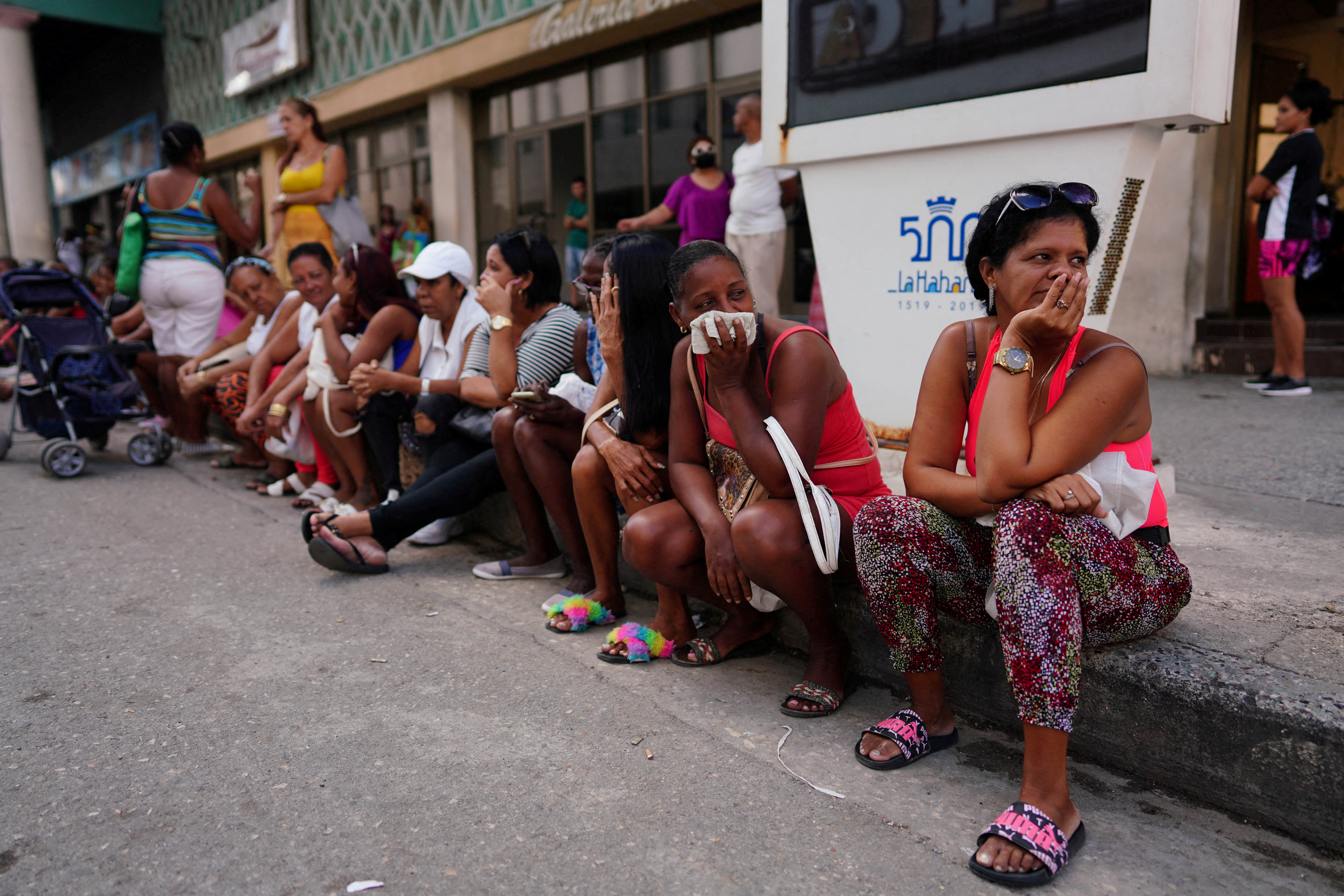
The next threshold could be a de facto “quarantine” rather than an open attack: a naval blockade, pressure on fuel suppliers, or selective interdiction of energy or commercial flows. Cuba’s energy and food crisis gives Washington a powerful lever.
A limited military raid is possible, but it would require a credible casus belli. The most compelling narrative today centers on drones, Guantánamo, and the Russian, Chinese, and Iranian presence on the island. Cuba accuses Washington of building a “fraudulent case” to justify sanctions and a possible intervention. Axios, citing classified intelligence, reported that Cuba has acquired more than 300 military drones and that there have been discussions of possible attacks against Guantánamo, US naval units, or Key West, while noting that US officials do not consider a Cuban attack imminent.
In this frame, the most coherent action would be a limited raid presented as defensive rather than a war of conquest: striking or neutralizing infrastructure deemed a “direct threat” – drones, radar, intelligence, and military security – or using the indictment of Raúl Castro as a political-legal device to replicate, at least symbolically, the Venezuelan precedent. Castro’s indictment has fueled comparisons with the Maduro model.
The critical window runs from late May through June 2026. Three dates/conditions matter. First: June 5, when the OFAC window on GAESA closes, could mark a further tightening. Second: the return of Congress after the May/June recess, as the dispute over war powers tied to Iran is already growing and could make another operation more costly. Third: the outcome of negotiations with Iran.
So yes, parallel action is already possible in May or June, but only if it remains brief, demonstrative, and narratively defensive. A limited attack could be launched even while Iran remains open, especially if Washington wants to show that the hemispheric theater is not subordinate to the Middle East. A real regime-change operation, by contrast, would be more likely after a credible truce with Tehran or a minimal agreement on Hormuz. Iran does not block Cuba; it disciplines its scale.
Trump can strike Cuba only if he manages to sell the action as defensive sovereignty, not as another opaque war. The Cuba file can be activated in parallel with Iran as pressure and as a limited strike by June; to become a regime war, it needs Iran to stop consuming attention, legitimacy, and military margin.
In sum:
Most likely scenario: coercive escalation without invasion, featuring new sanctions, naval pressure, a threat of interdiction, conditional humanitarian offers, and psychological warfare aimed at the Cuban elite.
Possible scenario: a limited raid as early as June if an episode linked to drones, Guantánamo, US ships, Russian, Chinese, Iranian intelligence, or an attack on US interests is constructed or perceived.
Less likely scenario in the short term: occupation or an extended regime-change operation before Iran is at least frozen. The lack of an alternative to the regime and the difficulty of identifying a Cuban Delcy Rodríguez should be taken into account.

Leave a Reply